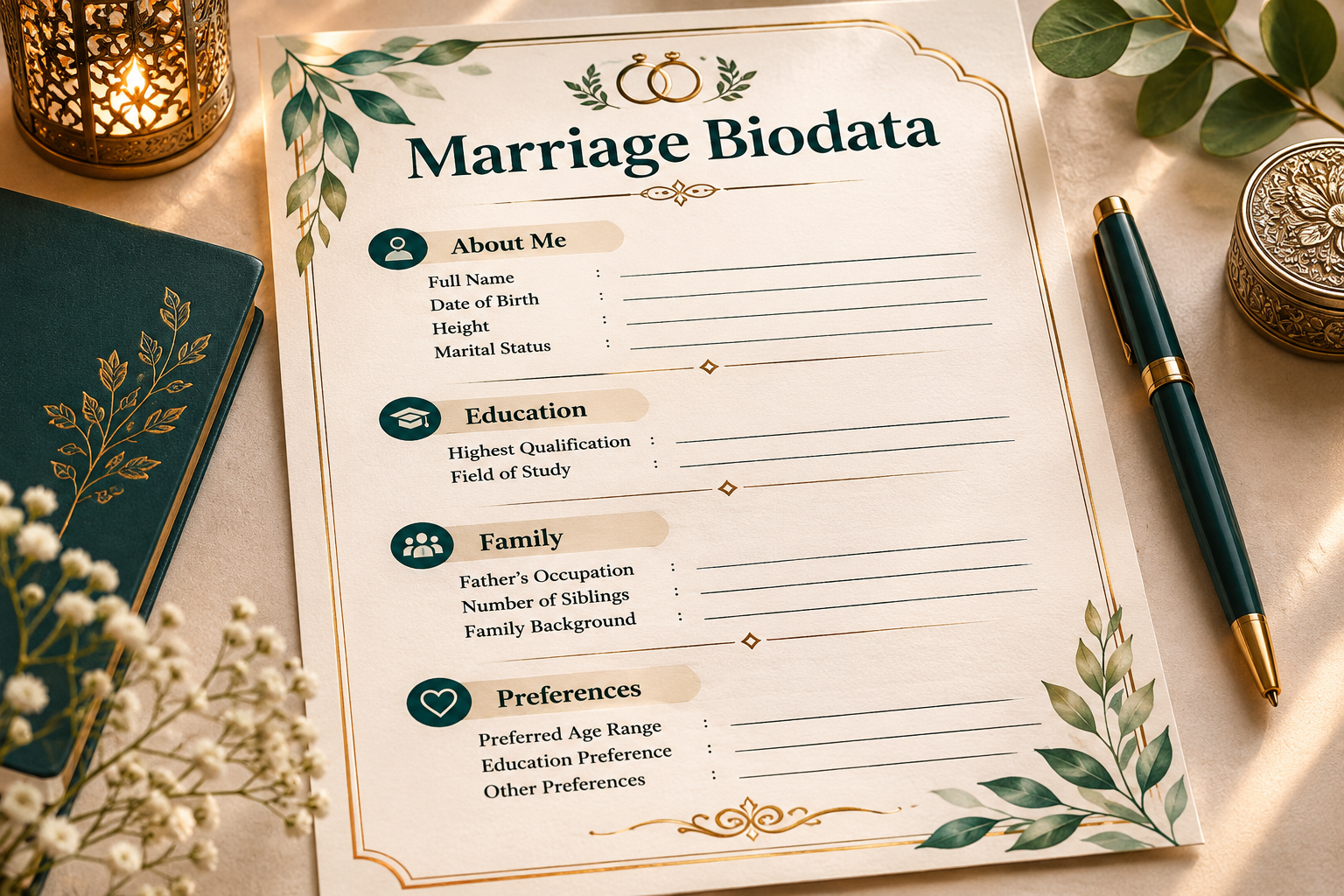
Making a marriage biodata should not feel like filling out a job application. You are introducing yourself to someone who may become an important part of your life. Your biodata should therefore share more than your age, education, and profession. It should offer a genuine glimpse into your personality, lifestyle, and expectations.
If you are wondering how to make biodata for marriage, the good news is that you do not need professional writing or graphic design skills. A thoughtful introduction, accurate information, and a simple layout are enough to create a meaningful matrimonial profile.
This guide explains what to write, how to arrange your information, and how to prepare a marriage biodata that feels personal rather than copied from a generic template.
What Is a Marriage Biodata?
A marriage biodata is a document containing essential personal, educational, professional, and family information about someone seeking marriage.
It helps potential partners and families understand basic compatibility before beginning a more detailed conversation.
Unlike a professional résumé, a matrimonial biodata focuses on your background and the kind of relationship you hope to build.
A good marriage biodata answers three important questions:
- Who are you?
- What kind of life do you enjoy?
- What matters to you in a future marriage?
These questions provide a useful starting point for writing a balanced profile.
How to Make Biodata for Marriage in 30 Minutes
You can prepare a complete first draft in approximately 30 minutes using the following method.
1. Collect Your Essential Information
Start by writing down the details you feel comfortable sharing.
Your basic information may include:
- Full name
- Age
- City and country
- Highest educational qualification
- Current profession
- Languages spoken
- Marital status, if relevant
Additional information, such as height, religion, or cultural background, may be included according to your preferences and the expectations of your intended audience.
Practical tip: Write your information in a separate document before choosing a design. This makes editing easier and prevents unnecessary formatting changes.
2. Write a Personal Introduction
Your introduction is often the most memorable section of your marriage biodata.
Instead of writing only “I am honest, educated, and caring,” describe something that shows your personality.
For example:
“I enjoy quiet weekends, exploring new restaurants, and spending time with people close to me. I value kindness, personal growth, and open communication. I believe a successful marriage involves friendship, mutual understanding, and supporting one another through life’s changes.”
An effective introduction sounds like a real person speaking, not a collection of impressive adjectives.
Keep it between 40 and 70 words whenever possible.
3. Describe Your Education and Career
Your educational and professional background can be presented in just a few lines.
For example:
Education: Bachelor’s Degree in Business Administration
Profession: Digital Marketing Specialist
Current Location: Toronto, Canada
You may also briefly explain whether your career involves travel or relocation.
Avoid including your complete employment history, salary documents, or unrelated qualifications.
4. Introduce Your Family Respectfully
Family information is important in many marriage traditions, but the amount of detail varies across cultures.
You can mention your family’s general background, the city where they live, and shared values.
For example:
“I belong to a supportive family that values education, respect, and maintaining strong relationships. We enjoy spending time together while encouraging everyone to make independent decisions.”
You do not need to reveal relatives’ private information.
5. Explain Your Partner Expectations
The partner preference section should describe compatibility rather than create a long list of demands.
Consider mentioning qualities such as:
- Respectful communication
- Shared responsibilities
- Emotional maturity
- Family values
- Career and personal ambitions
- Openness to relocation, when relevant
For example:
“I hope to meet someone who values honesty, enjoys meaningful conversations, and believes that important life decisions should be made together.”
This provides useful direction without making your expectations sound unnecessarily restrictive.
Simple Marriage Biodata Format: Ready-to-Use Example
Below is a fictional marriage biodata sample you can customize.
MARRIAGE BIODATA
Personal Information
Name: Maya Robinson
Age: 29 Years
Location: Birmingham, United Kingdom
Education: Bachelor’s Degree in Business Management
Profession: Project Coordinator
Languages: English and French
About Me
I am a thoughtful and optimistic person who enjoys reading, travelling, and discovering new experiences. I appreciate meaningful friendships, honest conversations, and spending time with family. I believe a healthy marriage should provide both partners with emotional support and room to grow.
Family Background
I come from a close-knit family that values kindness, education, and mutual respect. My family encourages independence and supports individual career choices.
Partner Preferences
I would love to meet someone who is considerate, emotionally mature, and comfortable discussing future goals. Mutual understanding and a shared willingness to build a happy life are especially important to me.
Interests
Travelling, cooking, reading, and outdoor activities.
This example is fictional and intended for guidance. Replace every detail with your own accurate information.
The Two-Version Marriage Biodata Method
One practical approach is to prepare two versions of your matrimonial biodata.
Version One: Your Introduction Profile
This is a short, one-page document containing your first name or preferred name, general location, education, occupation, interests, and a brief introduction.
It is suitable for initial introductions when you do not yet know the recipient well.
Version Two: Your Detailed Profile
After establishing trust, you can share additional information that both individuals consider relevant, such as family circumstances, relocation plans, or future living arrangements.
This approach allows you to communicate clearly while protecting your privacy.
How to Design a Marriage Biodata That Looks Professional
A marriage biodata does not need expensive graphics or complicated borders.
You can create an attractive document using Microsoft Word, Google Docs, or a suitable online editor.
Choose a readable font, keep headings consistent, and divide your information into clearly labelled sections.
For a modern matrimonial biodata design, try an ivory background with deep green headings and subtle gold accents.
One or two pages are generally sufficient.
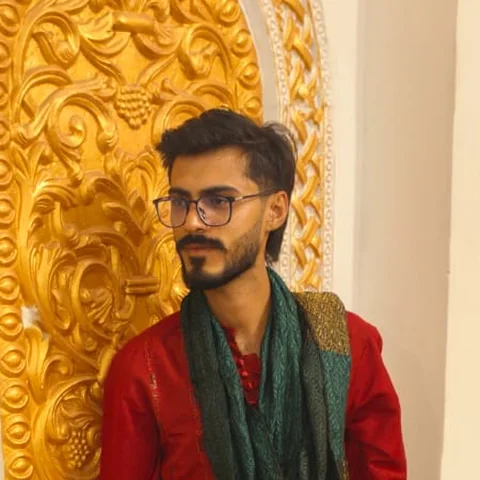
A photograph is optional. If you include one, choose a recent, clear image that represents you accurately.
Once you have completed the design, save the document as a PDF. This helps preserve formatting when it is viewed on different phones and computers.
For additional layout guidance and profile-building methods, explore our detailed guide on how to create biodata for marriage.
Common Mistakes to Avoid
A matrimonial biodata can lose its effectiveness when the information feels exaggerated, unclear, or unnecessarily complicated.
Avoid these mistakes:
- Writing too much: Keep information relevant to an initial marriage introduction.
- Using generic descriptions: Replace empty adjectives with specific personal details.
- Sharing sensitive information: Avoid identity numbers, bank details, and your full residential address.
- Setting unrealistic expectations: Express preferences respectfully.
- Copying someone else’s biography: Your biodata should describe your actual life.
- Ignoring readability: Avoid tiny fonts, crowded sections, and excessive decoration.
Before sharing your final document, read it aloud. If the language feels unnatural, simplify it.
Frequently Asked Questions
Can I make marriage biodata on my phone?
Yes. You can use Google Docs or a mobile document editor to write, format, and export your marriage biodata as a PDF.
What is the best format for marriage biodata?
A clean one-page format works well for many introductions. Use separate sections for personal details, education, profession, family background, and partner preferences.
Is a photo compulsory in marriage biodata?
No. A photograph is a personal choice. You can share one later when you feel comfortable.
Can the same marriage biodata format be used for a bride and groom?
Yes. The core structure works for anyone. Customize the information according to your circumstances, cultural expectations, and personal preferences.
Should I include my salary in my marriage biodata?
There is no universal requirement. You can discuss financial expectations privately at an appropriate stage instead of including sensitive financial details in a document that may be forwarded.
Final Thoughts
Learning how to make biodata for marriage is ultimately about presenting yourself with clarity and confidence.
You do not need impressive language, an expensive template, or a lengthy family history. You need honest information, a readable structure, and a few sentences that communicate who you really are.
A good marriage biodata should open the door to a genuine conversation, not attempt to tell your entire life story on a single page.