
A wedding invitation is often the first glimpse guests get of a couple’s celebration. Before they see the decorations, meet the families, or arrive at the venue, they see the invitation. That makes choosing the right marriage card format an important part of wedding planning.
A beautiful card should do more than announce two names. It should welcome guests, reflect family traditions, and provide every detail needed to attend comfortably.
Whether you prefer a traditional Indian wedding card, a simple English invitation, or a modern digital design, this guide will help you create meaningful wording without making the card feel crowded.
What Is a Marriage Card Format?
A marriage card format is the arrangement of information, invitation wording, and design elements used to announce a wedding.
Most formats contain the couple’s names, the hosts, the wedding date, ceremony time, venue, and a welcoming message.
However, the presentation changes depending on the celebration.
Some families prefer formal wording that honours parents and grandparents. Others choose a short invitation written directly by the couple.
The best marriage invitation card format is one that matches your celebration while remaining easy for guests to understand.
Standard Marriage Card Format in English
If you are unsure where to begin, use this simple structure:
- Opening blessing: Start with a religious blessing or a warm introductory phrase, if appropriate.
- Host names: Mention the parents, families, or couple inviting the guests.
- Invitation message: Politely request the guest’s presence.
- Bride and groom names: Display the couple’s names prominently.
- Wedding date and time: Include the complete date and ceremony time.
- Venue details: Provide the location name, address, and city.
- Closing and RSVP: End with a welcoming message and contact information.
You can adjust this order according to family preferences. What matters most is that guests can quickly identify the event, its location, and its timing.
4 Ready-to-Use Marriage Card Format Examples
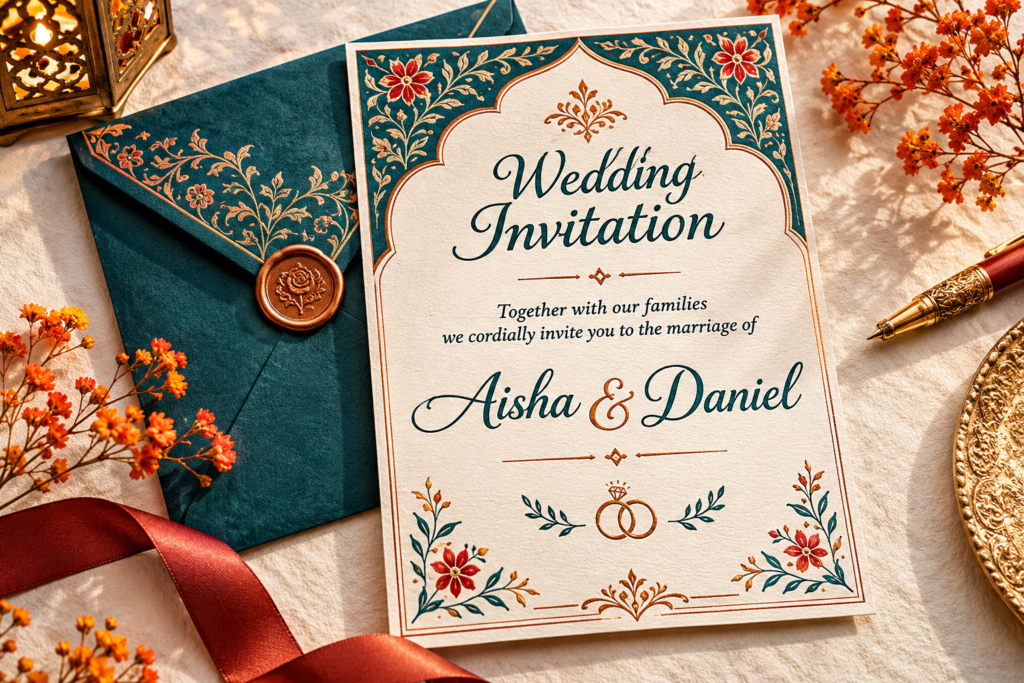
1. Traditional Marriage Card Format in English
This example works well for families planning a formal wedding celebration.
With Love and Blessings
Mr. and Mrs. [Parents’ Names]
request the pleasure of your company at the wedding celebration of their beloved daughter
[Bride’s Full Name]
with
[Groom’s Full Name]
Son of [Groom’s Parents’ Names]
Date: [Day, Date, Month, Year]
Time: [Ceremony Time]
Venue: [Wedding Hall, Complete Address]
Your presence and blessings will make our celebration even more special.
RSVP: [Contact Number]
This format leaves space for traditional family introductions without overwhelming the invitation.
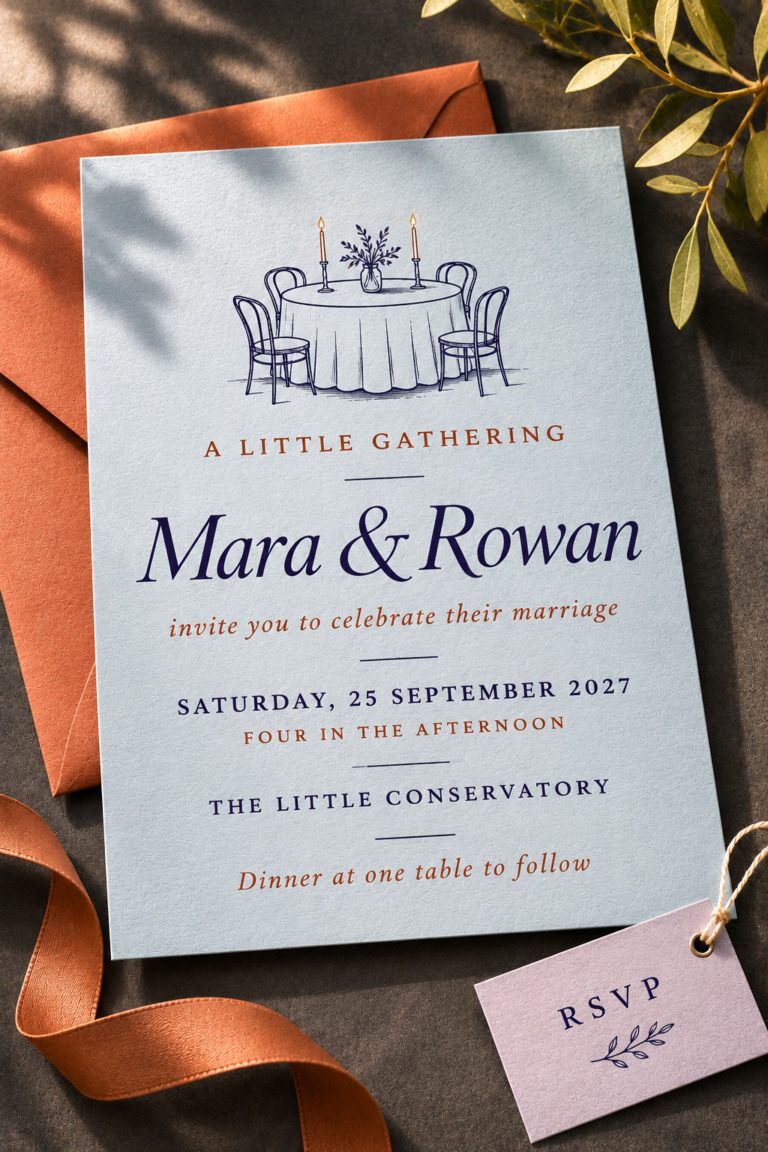
2. Simple Marriage Card Format for Modern Couples
A modern wedding card does not require lengthy introductions. Short, sincere wording can create an equally memorable impression.
Two Hearts, One Beautiful Beginning
Together with our families,
[Partner One] & [Partner Two]
invite you to join us as we celebrate our marriage.
[Day, Date]
[Time]
[Venue Name]
[City, Country]
Dinner and celebrations to follow.
Please confirm your attendance by [RSVP Date].
This simple wedding card format works particularly well with minimalist designs and digital invitations.
3. Muslim Marriage Invitation Card Format
For a Muslim wedding, families may wish to include an Islamic opening and identify the Nikah or Walima ceremony clearly.
Bismillah-ir-Rahman-ir-Raheem
With gratitude to Allah Almighty,
The families of [Bride’s Name] and [Groom’s Name]
warmly invite you to attend their
Nikah Ceremony
Date: [Day and Date]
Time: [Time]
Venue: [Mosque or Wedding Venue]
Address: [Complete Address]
We would be honoured by your presence and prayers as the couple begins their married life.
RSVP: [Family Contact]
The wording can be adapted for a Barat or Walima invitation by changing the event name and relevant details.
4. Short Marriage Card Format for WhatsApp
Digital invitations are convenient when guests live in different cities or countries.
We’re Getting Married!
[Name] ❤️ [Name]
A new chapter begins, and we’d love to celebrate it with you!
Date: [Date]
Time: [Time and Time Zone]
Location: [Venue]
Map: [Google Maps Link]
Please RSVP by [Date].
We hope to see you there!
For international guests, mentioning the time zone can prevent confusion when sharing livestream details or online ceremonies.
How to Personalize Your Marriage Invitation Card
The easiest way to make an invitation distinctive is to include details that genuinely represent the couple.
Instead of filling the card with popular romantic quotes, consider a short sentence reflecting your relationship.
For example:
“From unexpected conversations to a lifetime of adventures, our next chapter begins with you beside us.”
Personalization can also come from thoughtful typography, family-approved traditions, or a colour palette inspired by the wedding venue.
For Hindu weddings, families may include a traditional invocation or details of the Muhurtham. For Christian ceremonies, the invitation may identify the church and reception locations separately.
These elements should reflect the couple’s actual customs rather than being added simply for decoration.
Marriage Card vs. Marriage Biodata
A wedding invitation and a marriage biodata serve different purposes.
A biodata introduces someone during the matchmaking process, while an invitation announces an arranged wedding celebration.
If your family is preparing introductions before finalizing wedding arrangements, our guide on how to make biodata for marriage explains how to organise that information.
Personal biodata details generally do not belong on the wedding invitation.
Marriage Card Format for Multiple Wedding Events
Some weddings involve several celebrations across different dates and locations.
Instead of placing every detail inside one paragraph, create a clearly labelled schedule.
For example:
Mehndi Ceremony
[Day, Date] — [Time]
[Location]
Wedding Ceremony
[Day, Date] — [Time]
[Location]
Reception
[Day, Date] — [Time]
[Location]
For printed invitations, an additional details card can prevent the main design from becoming crowded.
Digital cards can place the schedule on a separate screen or linked webpage.
The important distinction is between the time guests should arrive and the time the ceremony actually begins.
Design Tips for a Beautiful Marriage Card
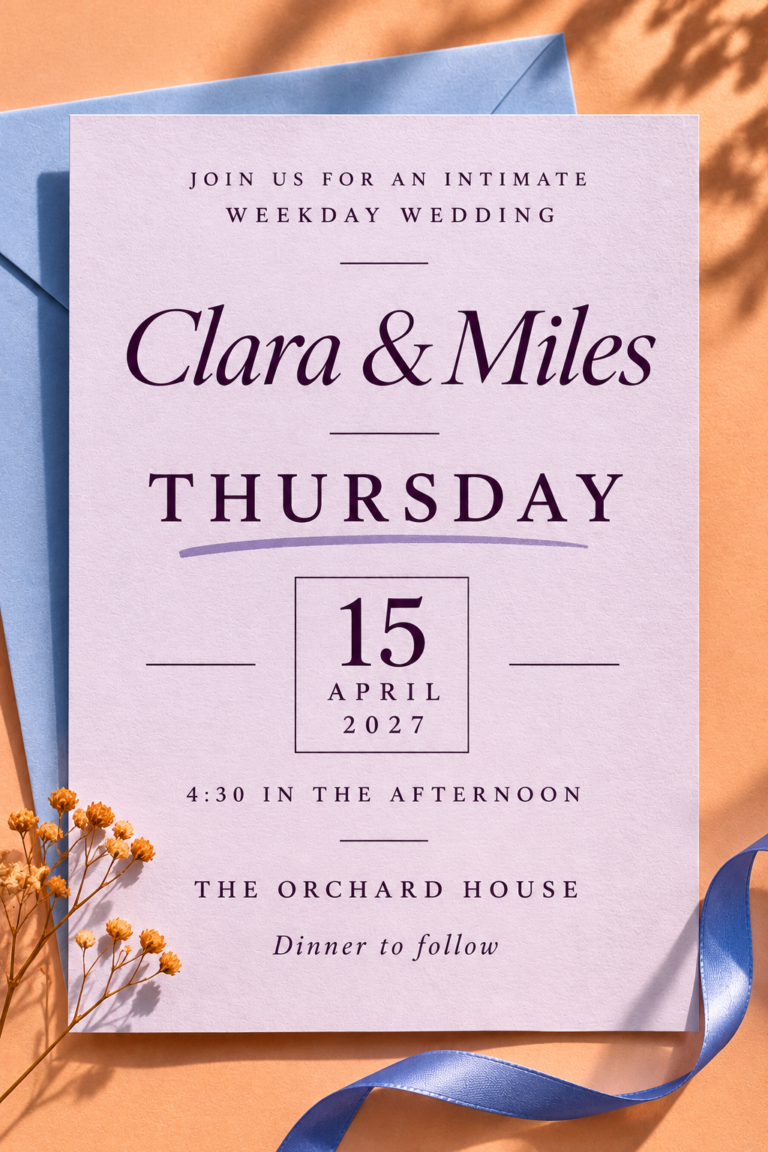
An attractive marriage card should balance appearance with readability.
Choose two complementary fonts: one decorative font for the couple’s names and another readable font for essential details.
Deep teal with copper, ivory with burgundy, or muted lavender with charcoal can create different visual moods.
Avoid placing important wording over complicated floral patterns.
For printed invitations, check that small text remains readable at the final print size. For digital invitations, preview the design on a mobile phone before sharing it.
A useful design principle is to make the couple’s names the visual focus while keeping the date and venue immediately noticeable.
The Three-Pass Marriage Card Checklist
Before sending a card to the printer or sharing it online, perform three checks.
First pass — Identity: Confirm the spelling of the couple’s names and any family members mentioned.
Second pass — Journey: Imagine receiving the invitation without knowing anything about the wedding. Could you identify the correct event, arrival time, and location?
Third pass — Practical details: Check the weekday against the calendar date, test map links, verify contact numbers, and confirm the RSVP deadline.
This simple process catches mistakes that decorative design reviews often overlook.
Frequently Asked Questions
What is the best marriage card format in English?
A good format includes the host names, couple’s names, invitation message, wedding date, time, venue, and RSVP information. The wording can be traditional or modern.
Can I create a marriage card without parents’ names?
Yes. Couples hosting their own celebrations can use wording such as “Together with our families” or directly invite guests in their own names.
What should I write on a simple marriage invitation?
A short welcoming message followed by the couple’s names, date, venue, and attendance details is usually sufficient.
Is a digital marriage card different from a printed card?
The essential information remains the same. Digital cards can additionally include interactive maps, RSVP links, and convenient event updates.
Final Thoughts
A thoughtful marriage card format brings together clear information, family traditions, and the couple’s personality.
You do not need complicated wording or expensive decoration to create a meaningful invitation. Start with the essential details, choose language that feels natural, and check the final design from a guest’s perspective.
The result will be a wedding invitation that is both beautiful and genuinely useful.