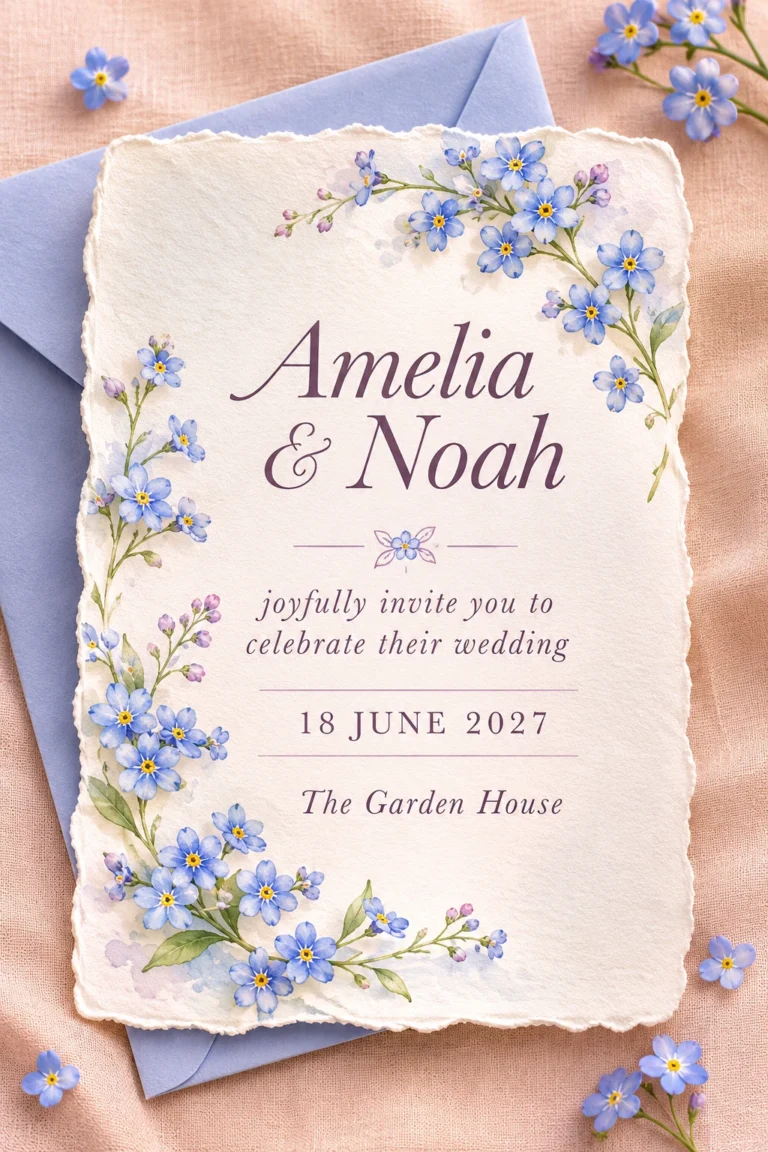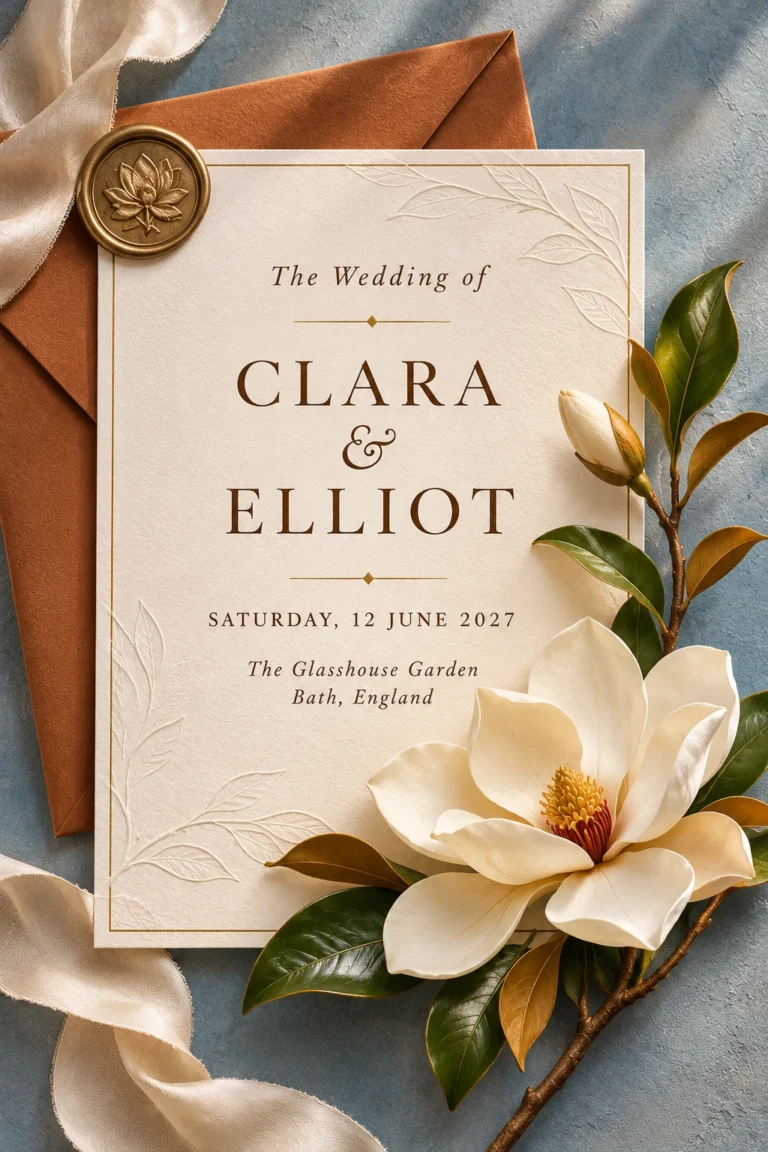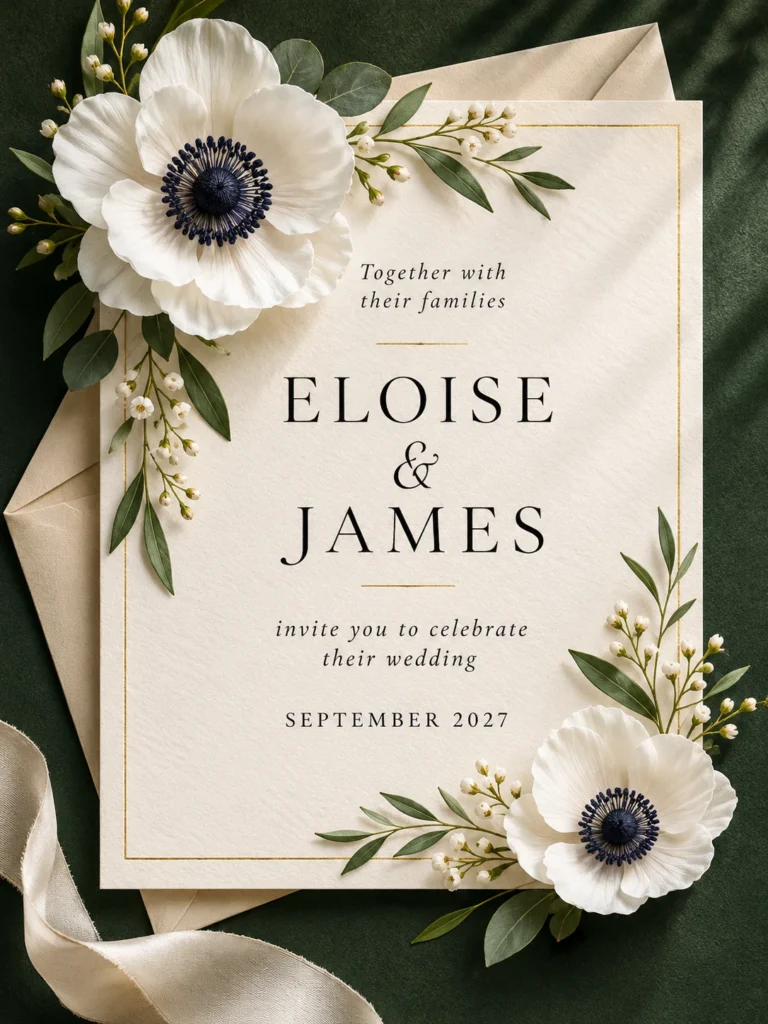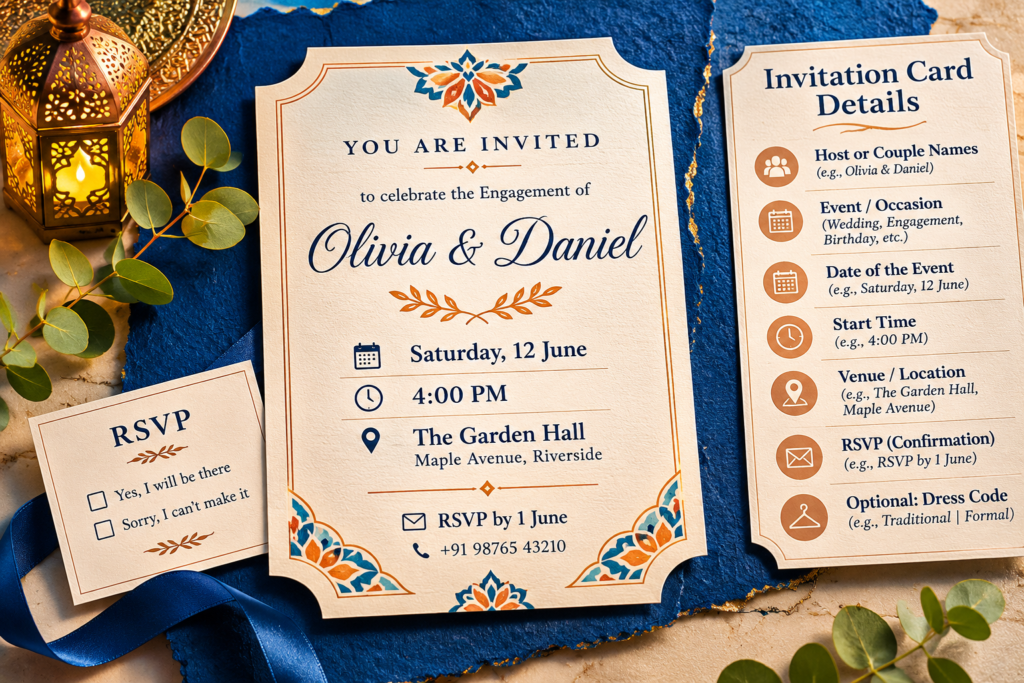
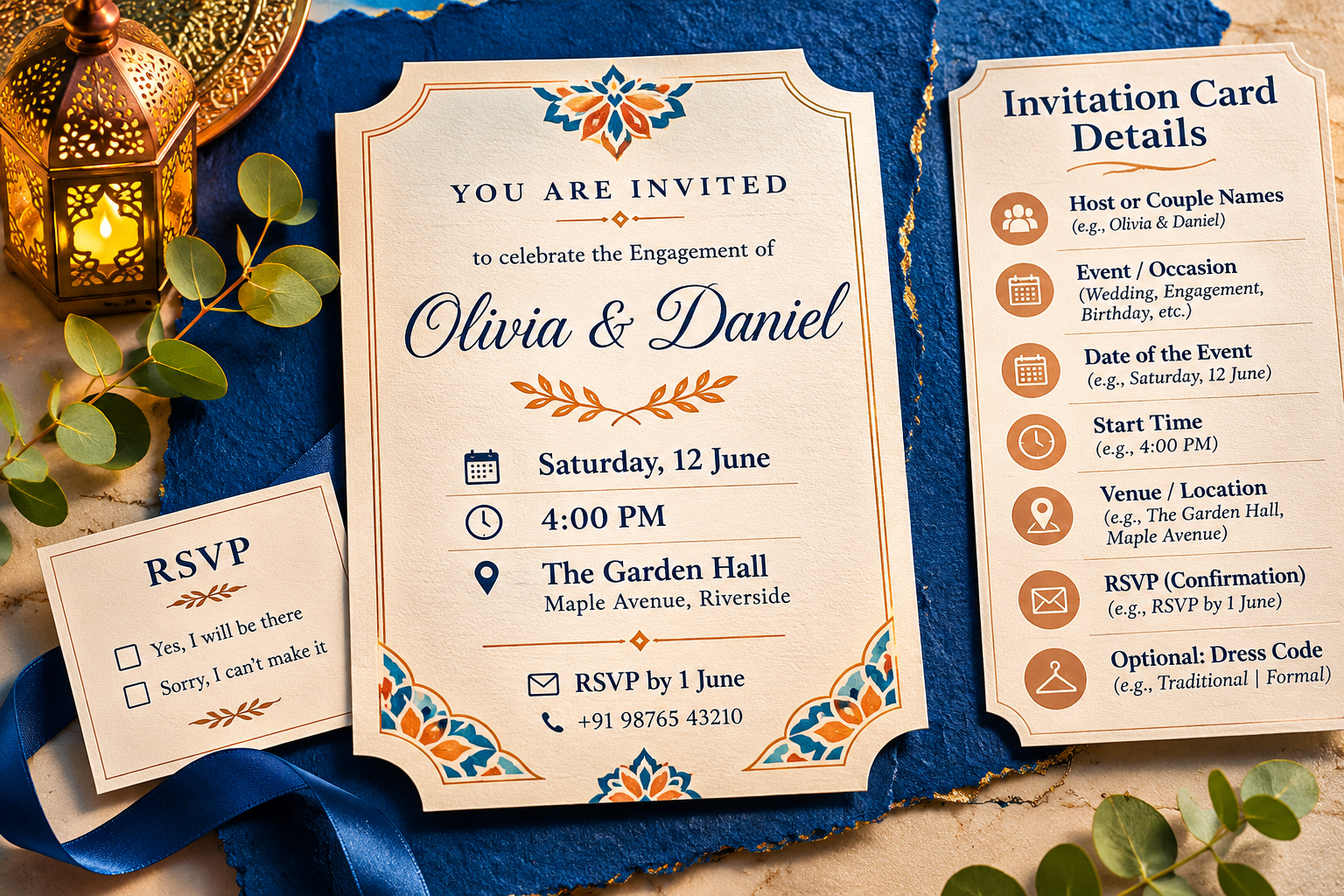
A beautiful invitation catches attention, but the details printed inside it help guests arrive at the right place, at the right time, feeling prepared for the celebration.
Whether you’re planning a wedding, engagement, birthday party or family gathering, knowing which invitation card details to include can prevent unnecessary questions and last-minute confusion.
An invitation doesn’t need long paragraphs or complicated wording. It simply needs to communicate the occasion, share essential information and make the guest feel welcome.
This guide explains what to write on an invitation card, how to organize the information and which small details are worth adding for different celebrations.
What Are Invitation Card Details?
Invitation card details are the pieces of information that tell guests who is hosting an event, what is being celebrated, when it takes place and where they should go.
The most important information usually includes the host’s name, event title, date, starting time, location and RSVP instructions.
Some invitations also mention dress codes, parking arrangements, meal preferences or cultural traditions.
The goal is simple: a guest should understand the invitation without needing to contact the organizer for basic information.
Essential Details to Include on an Invitation Card
1. Host Names or Celebrant Names
Begin by identifying the person or people behind the celebration.
For a wedding, this might include the couple’s names. For a birthday party, it usually means the birthday person’s name. Formal celebrations may mention parents or family hosts.
Example:
“Together with their families, Olivia and Daniel invite you to celebrate their wedding.”
Always confirm spelling, preferred names and titles before finalizing the design.
2. Event Name and Purpose
Guests should immediately understand what they’re being invited to celebrate.
Common examples include Wedding Ceremony, Engagement Celebration, Birthday Party, Baby Shower and Housewarming Gathering.
Choose a straightforward event title instead of relying entirely on decorative wording.
For celebrations involving unfamiliar customs, a short explanation can make the invitation more welcoming.
3. Complete Event Date
Write the event date clearly, preferably with the day of the week.
Example:
Saturday, 12 December 2026
For international guests, spelling out the month avoids confusion between date formats such as 04/05/2027.
Double-check that the weekday matches the calendar date before distributing invitations.
4. Starting Time and Schedule
Every invitation should identify when guests are expected to arrive.
For example:
Guest Arrival: 5:30 PM
Ceremony Begins: 6:00 PM
Dinner: 7:30 PM
When an event includes several activities, separating arrival time from ceremony time helps guests plan more accurately.
Remember to specify the local time zone for virtual celebrations involving people in different countries.
5. Venue Name and Address
Include the venue name, complete address and helpful location instructions.
A practical format is:
The Garden Hall
25 Maple Avenue
Riverside, California
For digital invitation cards, a clickable map link can help visitors navigate directly to the venue.
Check the address on a map before publishing. Similar venue names or nearby branches can easily cause confusion.
6. RSVP and Contact Information
RSVP means guests are being asked to confirm whether they will attend.
A useful invitation states the response deadline and explains how to reply.
Example:
“Kindly RSVP by 1 December using the contact details provided.”
For larger events, an online response form may be more convenient than handling individual messages.
Only publish contact details you have permission to share.
Invitation Card Details for Different Occasions
Not every invitation requires the same information. A birthday card may need only a few lines, while a wedding invitation often includes additional schedules and instructions.
Wedding Invitation Details
Wedding cards generally feature the couple’s names, ceremony date, venue, timing and reception information.
If the ceremony and reception happen in different places, show both locations separately.
Couples may also include accommodation suggestions, transportation arrangements or a wedding website for guests traveling from other cities.
Engagement Invitation Details
An engagement card usually introduces the couple and invites guests to celebrate their upcoming marriage.
The wording can be formal, modern or family-oriented.
For example:
“Please join us for an evening of joy and blessings as we celebrate the engagement of Olivia and Daniel.”
Some families also include a ring exchange or traditional ceremony in the event schedule.
If you’re exploring the significance of these celebrations, read our guide to engagement ceremony meaning to understand how engagement traditions and celebrations can differ.
Birthday Invitation Details
Birthday invitations should include the celebrant’s name, age if appropriate, party date, venue and starting time.
For children’s parties, parents may appreciate additional information about supervision, activities and collection arrangements.
A themed party might also mention suggested clothing or items guests should bring.
Invitation Card Wording Examples
The wording on a card should match the relationship between the hosts and their guests.
Formal Wedding Invitation
“With great pleasure, we invite you to celebrate the wedding of Olivia and Daniel. Please join us for a memorable day filled with happiness, love and treasured moments.”
Simple Birthday Invitation
“You’re invited! Come celebrate Emma’s birthday with an afternoon of games, laughter and delicious treats. We would love to see you there!”
Family Celebration Invitation
“Our family is gathering for a special celebration, and it wouldn’t feel complete without you. Please join us as we make wonderful memories together.”
Each example can be followed by the date, time, location and RSVP details.
The Guest Journey Check: A Practical Design Method
Before sharing an invitation, review it from the perspective of someone who knows very little about your event.
Imagine a guest opening the card for the first time.
First, they need to recognize the celebration. Next, they should find the date and time without searching through decorative text. Finally, they need to locate the venue and understand how to respond.
This simple three-stage review can reveal problems that are easy to miss while designing.
A useful extra test is to show the invitation to someone who hasn’t helped plan the event. Ask them where they would go, when they would arrive and whether they need to reply.
If they hesitate, improve the layout before publishing.
Common Invitation Card Mistakes to Avoid
An invitation may look attractive but still be difficult to use.
Tiny fonts can make addresses unreadable on mobile screens. Decorative lettering may look elegant but become confusing for important names and dates.
Another common mistake is placing crucial information too close to the edge, where it might disappear during printing.
For digital invitations, avoid sharing only an image containing very small text. Test the design on an ordinary smartphone screen.
If you include a QR code, make sure it opens the correct destination and remains readable after resizing.
Final Invitation Card Checklist
Before printing, emailing or sharing a card, confirm the following:
-
Host or celebrant names are correct.
-
Event type is immediately clear.
-
Date, weekday and time are accurate.
-
Venue name and full address are included.
-
RSVP instructions are easy to follow.
-
Important guest instructions are visible.
-
Text remains readable on mobile and in print.
-
Map links and QR codes work correctly.
Frequently Asked Questions
What details should an invitation card include?
Most invitations should contain the event name, host or celebrant names, date, starting time, location and RSVP instructions.
Can an invitation card be short?
Yes. A short invitation is perfectly suitable when it clearly communicates all necessary information.
Should I include an RSVP deadline?
An RSVP deadline is helpful when attendance affects seating, catering or other arrangements. For a casual gathering, it may be optional.
What is the best invitation card format?
A clear layout places the occasion and names first, followed by date, time, venue and response instructions. Decorative elements should support readability.
Final Thoughts
The most successful invitation cards balance warmth, personality and practical information.
Whether you’re creating a modern digital invitation or a traditional printed card, prioritize clarity over excessive decoration.
With accurate invitation card details, thoughtful wording and an easy-to-follow layout, you can create an invitation that looks beautiful and makes every guest feel genuinely welcome.