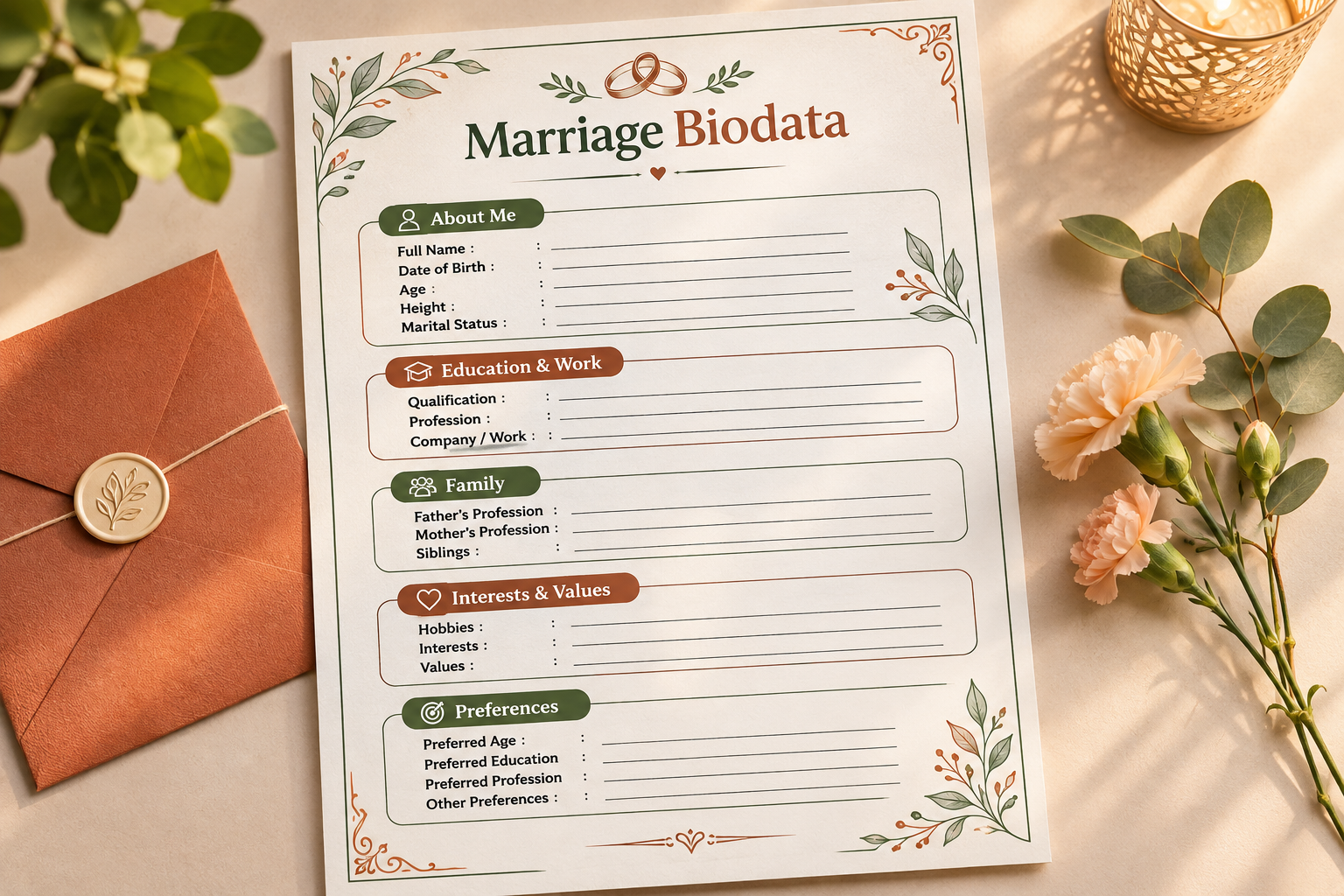
A marriage biodata is often the first introduction between two people who may be considering a future together. Before conversations begin, a clear profile helps families understand the basics: who you are, what you do, and what matters to you.
Yet creating one can feel surprisingly difficult. How much information should you share? Should it look traditional or modern? And is a photograph necessary?
This guide includes a free marriage biodata format PDF, a copy-ready sample, and practical advice for creating a profile that feels sincere rather than like a checklist. The goal is a one-page introduction that is easy to read on a phone, simple to print, and comfortable to share.
Download a Free Marriage Biodata Format PDF
Download the Free Editable Marriage Biodata PDF
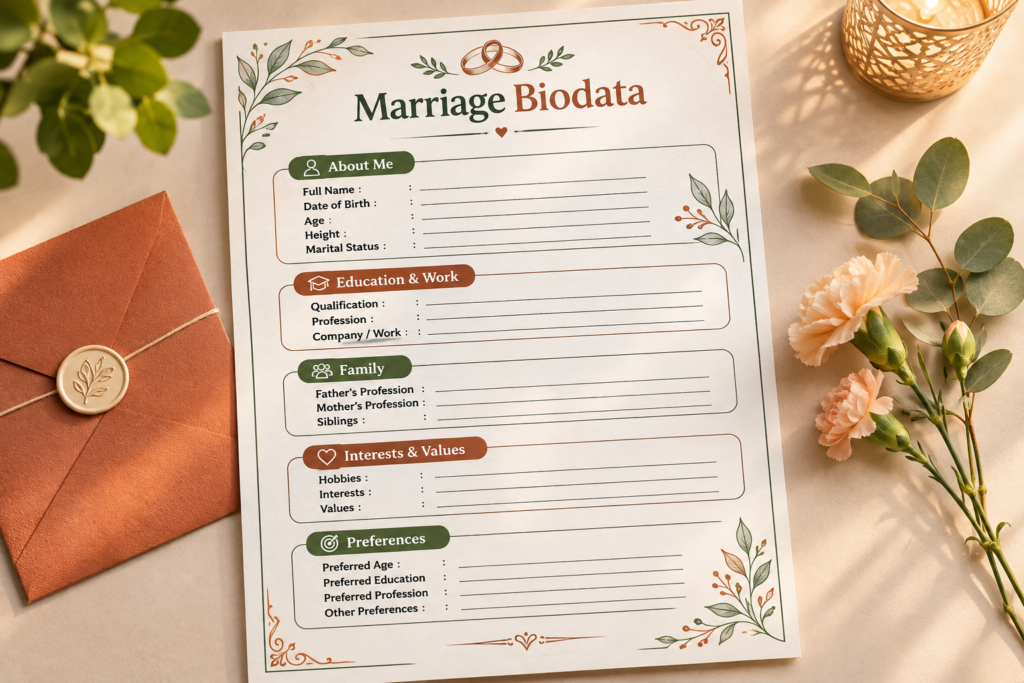
Our A4 template has 17 fillable fields covering personal details, education, work, family background, interests, and partner preferences.
Open the downloaded file in a PDF reader that supports forms, enter your information, and save a completed copy. You can also print it and write by hand. A photo space is included, but adding an image requires a PDF editor and is entirely optional.
The template is suitable for a bride, groom, or anyone preparing a matrimonial profile. It uses neutral language so you can adapt it to your own background and traditions.
What Is a Marriage Biodata?
A biodata for marriage is a short personal profile exchanged during the matchmaking process. You might hear it called a shaadi biodata, rishta biodata, matrimonial biodata, or marriage profile.
Unlike a job résumé, it is not about proving professional achievements. It is about helping another person get a genuine first impression.
A helpful biodata answers three questions: Who am I? What does my everyday life look like? What kind of relationship do I hope to build?
Family and cultural details can be included when relevant, but they do not need to crowd out your personality.
What to Include in a Simple Marriage Biodata
A good one-page marriage biodata format usually needs these sections:
- Personal information: Name, age or date of birth, general location, and any other details you are happy to share.
- Education and career: Highest qualification, current work, or a short description of your professional interests.
- Family background: A brief introduction to your family, rather than a long list of relatives.
- About me: Hobbies, personality, languages, values, and the things you enjoy outside work.
- Partner preferences: A few meaningful qualities, such as kindness, communication, shared goals, or lifestyle compatibility.
- Contact route: A safe way to arrange a conversation, such as a family contact or a separate email address.
Some families also request birth time, horoscope information, religion, or community details. Include these only when relevant to your circumstances and with your consent. There is no single format that everyone must follow.
Marriage Biodata Sample in English
Here is a fictional example to show how the finished profile can sound natural without becoming overly formal.
Name: Aisha Khan
Location: Manchester, United Kingdom
Education: Master’s degree in Business Analytics
Profession: Project Coordinator
Interests: Reading, countryside walks, trying new recipes, and weekend family gatherings
Family: A close-knit family that values education, generosity, and spending time together.
About me:
“I enjoy calm weekends as much as lively family occasions. I value honesty, curiosity, and being able to laugh together, even on an ordinary Tuesday. I hope to build a home where both people feel heard and supported.”
Partner preferences:
“Someone respectful and emotionally mature who enjoys meaningful conversations and believes marriage is a partnership.”
This example is deliberately short. A real profile should use your own voice and only accurate information. You do not need impressive language or exaggerated accomplishments to make a positive introduction.
A Better Approach: Create Two Versions
Here is a useful approach when relatives, friends, or matrimonial contacts may forward your PDF. Prepare a first-look biodata and a private follow-up version.
The first-look document should contain enough information for a respectful introduction: general location, education, occupation, interests, and values.
Save more detailed family information, direct phone numbers, and personal circumstances for a conversation with someone you trust.
This separation makes sharing less stressful. It also prevents a document from carrying more personal information than a new contact needs.
Ask the person whose biodata it is to approve the final version before anyone forwards it.
How to Make Your Marriage Biodata Look Professional
Choose a clear heading, a readable font, and enough empty space between sections. A soft border or small floral detail can make the PDF attractive, but decorative elements should never compete with your name or personal introduction.
For most readers, one A4 page is a practical starting point.
If your document becomes crowded, shorten long sentences rather than shrinking the text until it is difficult to read.
Check the file on a mobile screen as well as a laptop. If your audience prefers printed copies, test one print before sharing widely.
You can create a simple marriage biodata PDF without a photograph. If you decide to add one, choose a recent image that represents you naturally and that you are comfortable sharing.
Small Details That Make a Profile Feel Human
A memorable biodata includes one or two details that sound like a real person.
Instead of writing “hobbies: travelling,” you might say, “I enjoy discovering small towns and planning relaxed trips with family.”
Instead of “looking for a good partner,” explain what good means to you: mutual respect, shared responsibilities, patience, or a love of learning.
Keep the tone positive, but don’t turn preferences into a shopping list. A marriage profile is an invitation to begin a conversation, not a final decision about compatibility.
When the relationship progresses toward a celebration, you can explore our invitation card in English guide for wording ideas to share happy news with friends and family.
Frequently Asked Questions
Can I edit the marriage biodata PDF on my phone?
Yes, if your phone has a PDF app that supports fillable form fields. Download the file, complete the boxes, and save a separate copy. If your browser doesn’t allow editing, open it in a dedicated PDF reader.
Is this marriage biodata format suitable for both girls and boys?
Yes. The template is gender-neutral and can be used for a bride, groom, or any person creating a marriage introduction. Add or omit optional fields according to personal and cultural preferences.
Should I include salary or a full home address?
Neither is necessary for an initial introduction. If financial or location details become important later, discuss them privately through a trusted channel. Avoid adding identity document numbers or sensitive records to a widely forwarded PDF.
What is the best PDF size for sharing on WhatsApp?
A clean one-page PDF is usually convenient. Before sending, open the saved document to confirm the fields display correctly, the text is legible, and nothing has been cut off.
Final Thoughts
The best marriage biodata format PDF is not the most decorative one. It is the one that introduces you clearly, respectfully, and honestly.
Start with the editable template, keep the essentials, add a few words that genuinely sound like you, and share only the details you feel comfortable sharing.