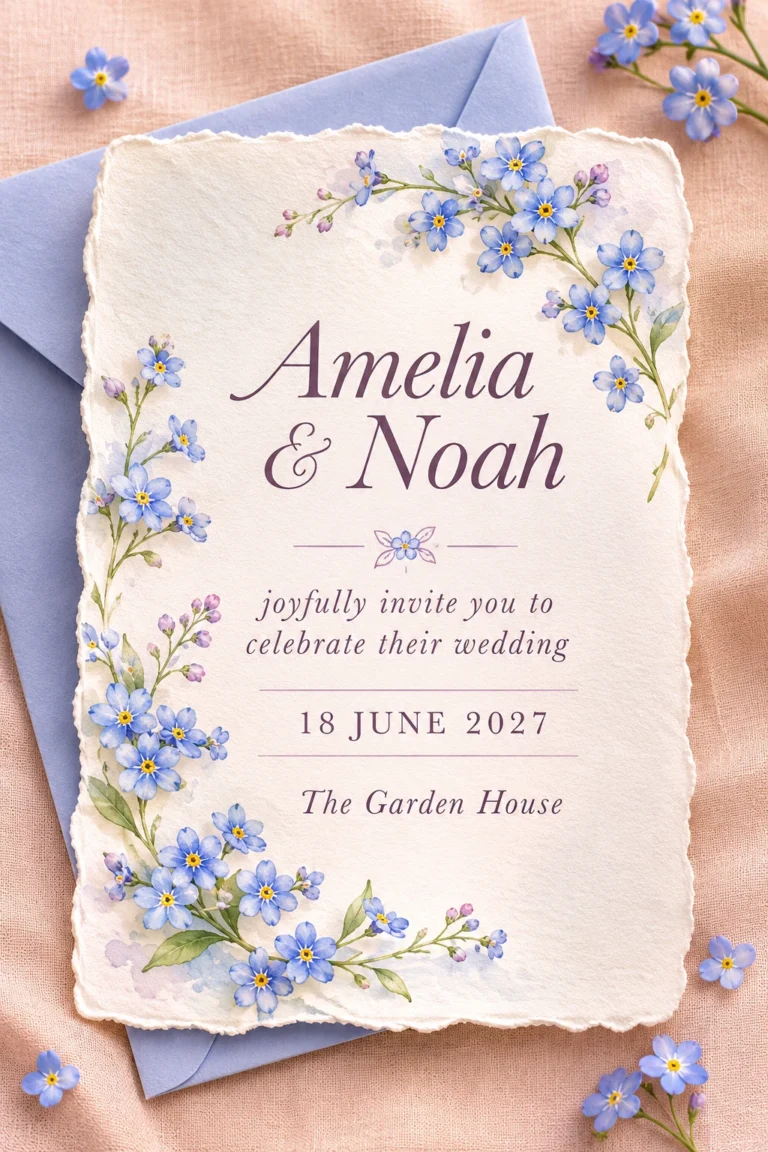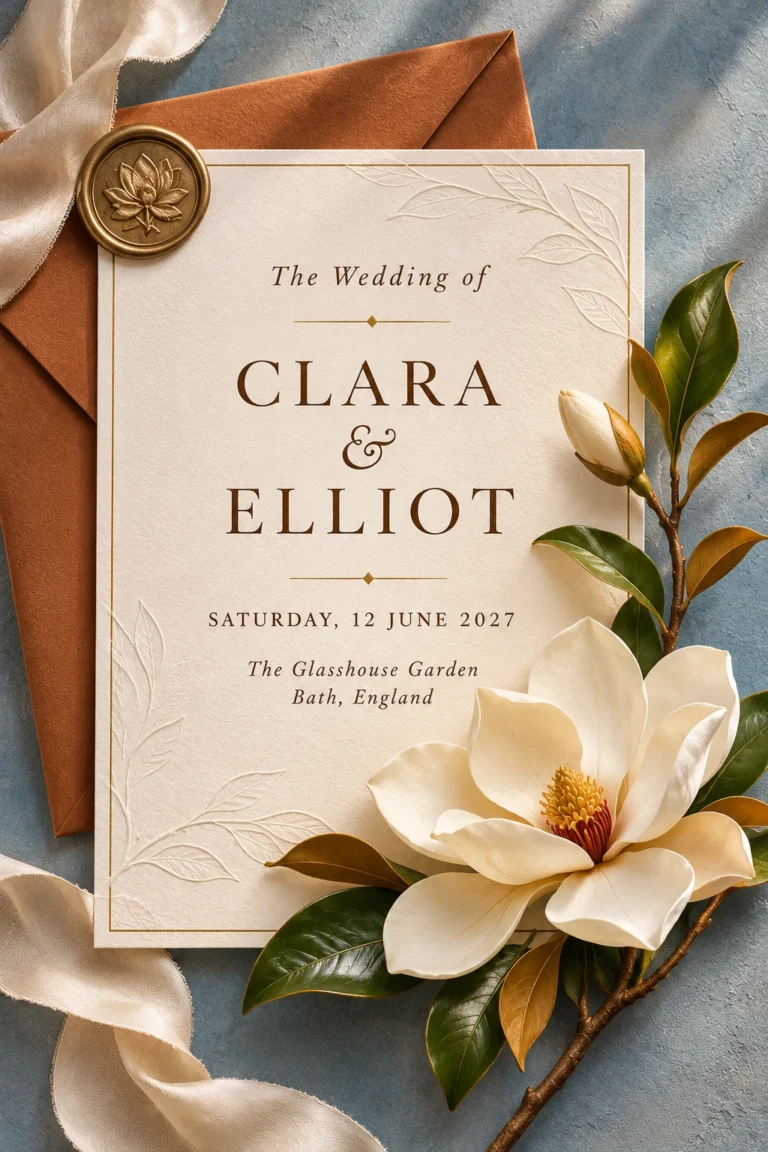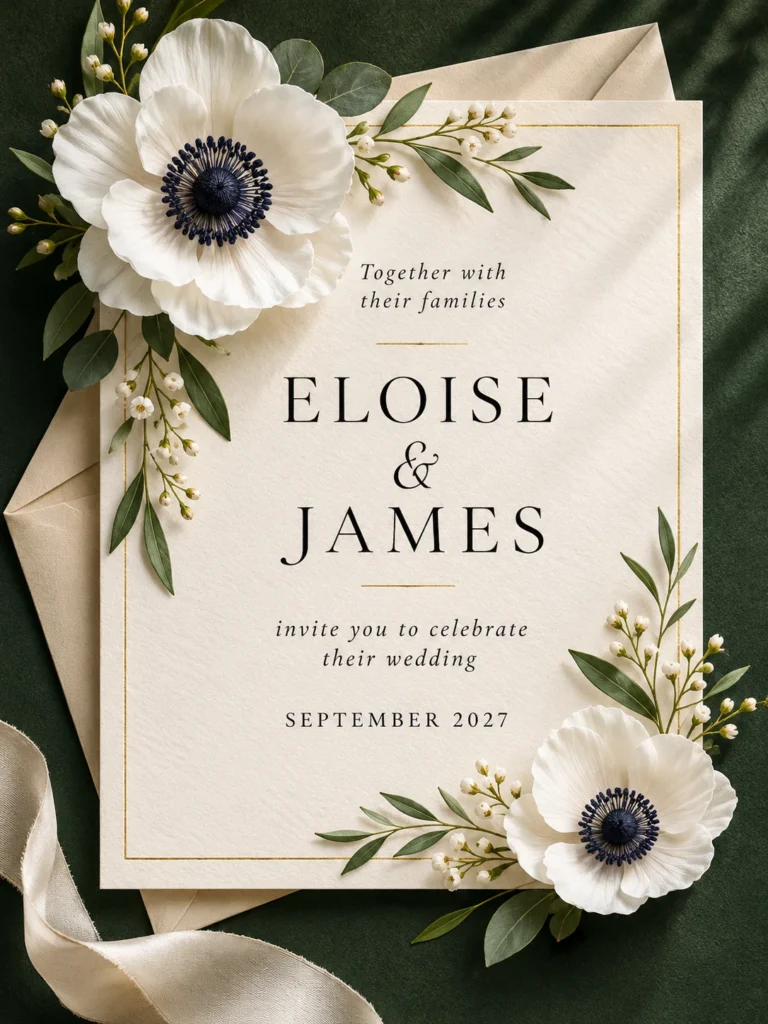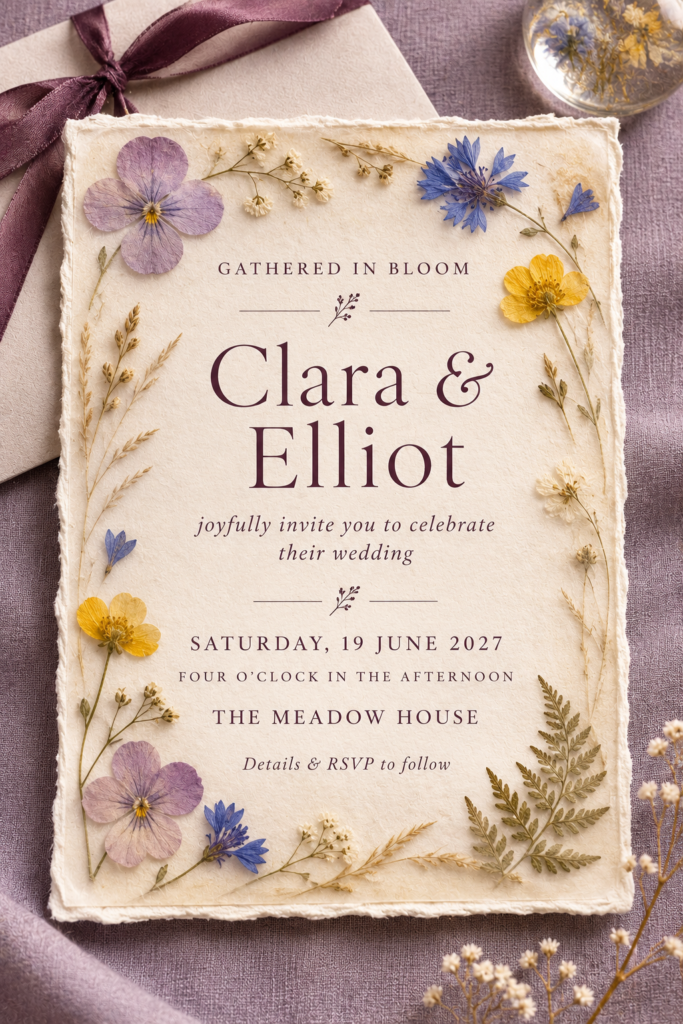
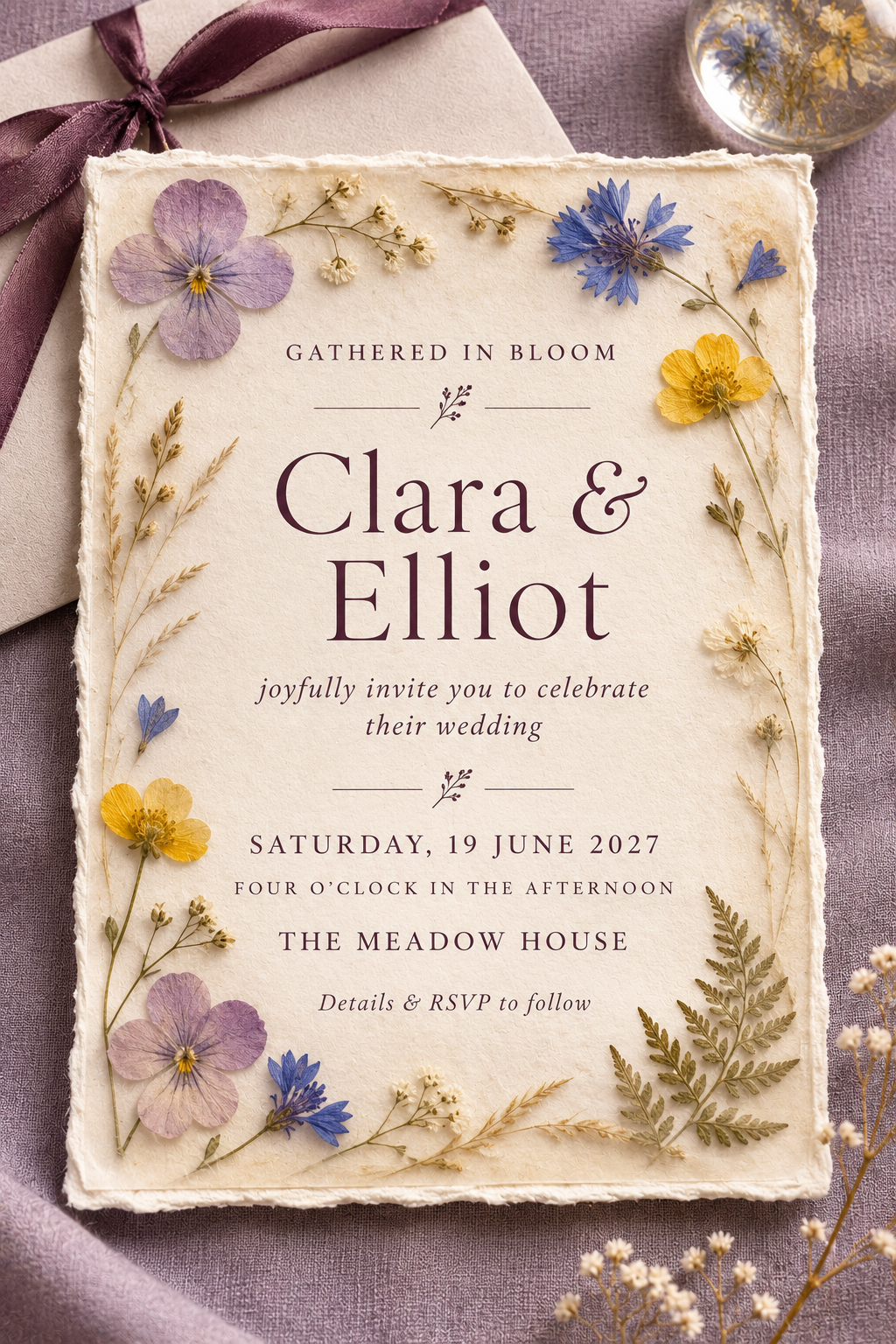
Imagine opening a wedding invitation and discovering delicate flowers arranged as though they have been carefully preserved between the pages of an old botanical journal. Tiny blue petals, soft lavender blooms, and golden wildflowers create a beautiful frame around the couple’s names.
A floral wedding invitation design with pressed wildflowers captures this natural beauty in a personal and artistic way. Unlike conventional floral patterns, pressed-flower designs celebrate the distinctive shapes, flattened petals, and subtle imperfections of real plants.
Whether you prefer genuine dried flowers attached to handmade paper or professionally printed botanical artwork, this guide will help you create romantic wedding stationery with a thoughtful, distinctive appearance.
What Makes Pressed Wildflower Wedding Invitations Different?
Pressed wildflowers introduce an almost archival quality to wedding stationery.
Instead of large, colourful floral arrangements, the design features delicate plant shapes, fine stems, and naturally varied textures.
The result can resemble a preserved botanical specimen rather than a traditional decorative border.
There are two main ways to achieve this effect.
Real pressed flowers: Dried flowers are carefully attached to the invitation, creating subtle dimension and a handmade finish.
Printed pressed-flower artwork: Scanned, photographed, or illustrated botanical elements are reproduced directly onto the cardstock.
Both approaches can look beautiful, but they have different practical requirements. Real flowers need protection from damage, while printed illustrations are easier to reproduce consistently.
Five Creative Pressed Wildflower Invitation Design Ideas
1. The Botanical Specimen Invitation
Take inspiration from vintage plant-collection books.
Position two or three delicate wildflower stems vertically along one side of the card. Add the couple’s names in elegant serif typography and use small, restrained decorative lines.
A parchment-inspired background and muted plum lettering give the design a romantic, collected-over-time appearance.
For a personalised detail, choose flowers associated with the wedding season or a meaningful place, provided the species are suitable for the design.
2. The Floating Flower Border
Instead of arranging flowers into a symmetrical wreath, scatter individual pressed blooms around the outer edges.
Mix small yellow flowers, lavender-coloured petals, and fine grasses, leaving an open area in the centre.
This composition creates movement without overwhelming the invitation details.
Choose different flower sizes to avoid making the arrangement look like a repeated digital pattern.
3. The Transparent Vellum Overlay
Create a layered invitation using a printed botanical card and a translucent vellum sheet.
The lower layer displays pressed-flower artwork, while the translucent overlay contains the wedding details.
When assembled, the typography appears to float above the flowers.
This concept can be particularly attractive for romantic countryside celebrations and botanical-themed weddings.
Check print contrast before production, as light lettering over detailed artwork may be difficult to read.
4. The Single Preserved Flower
One carefully positioned flower can have more visual impact than a crowded arrangement.
Choose a small flattened bloom and place it beneath the couple’s names, leaving generous negative space around it.
A restrained palette of cream, muted violet, and charcoal creates a modern botanical look.
If you prefer simple nature-inspired stationery, our invitation background ideas provide additional ways to balance decorative artwork with readable text.
5. The Wildflower Herbarium Card
Design an invitation resembling a page from a botanical archive.
Use fine lines, slightly irregular flower placements, and tiny decorative labels.
For example, a small caption reading “Gathered in Bloom” could sit above the names.
Avoid overwhelming the main information with botanical labels or decorative handwriting.
The most important text should remain immediately identifiable.
Choose Colours Inspired by Dried Wildflowers
Pressed botanical designs often work beautifully with softer, nature-inspired colours.
Consider these combinations:
| Colour Palette | Suggested Atmosphere |
|---|---|
| Lavender, plum and ivory | Romantic botanical elegance |
| Cornflower blue, cream and straw yellow | Fresh meadow-inspired design |
| Dusty mauve, parchment and brown | Vintage countryside charm |
| Muted violet, pale grey and olive | Contemporary botanical style |
A particularly distinctive approach is to use darker typography alongside light, irregular floral details.
This makes the flowers feel like preserved keepsakes while keeping the wording clear.
How to Create a Wedding Invitation with Real Pressed Flowers
If you want to make physical pressed-flower invitations, begin with a small prototype rather than preparing the entire set.
Step 1: Select Suitable Flowers
Choose relatively flat, delicate flowers that can be pressed without creating too much thickness.
Small flowers, individual petals, and slender leaves are often more manageable than bulky flower heads.
Use flowers obtained legally and responsibly. Avoid collecting protected plants or removing wildflowers from places where gathering is prohibited.
Step 2: Press and Dry the Flowers
Arrange the flowers between absorbent sheets and place them in a suitable flower press.
Allow them to dry thoroughly, following the press manufacturer’s instructions. Drying time varies according to the plants and conditions.
Flowers that retain moisture may discolour or develop mould, so avoid attaching them before they are completely dry.
Step 3: Prepare the Cardstock
Choose sturdy paper that can support delicate botanical pieces.
Textured cotton paper and matte cardstock can complement the natural appearance.
Position all printed wording before attaching flowers. This helps prevent decorative elements from covering important details.
Step 4: Secure and Protect the Flowers
Use an appropriate archival or acid-free adhesive, tested on a spare sample.
Apply it sparingly and handle delicate petals with care.
Consider a protective vellum layer if flowers may rub against envelopes or other stationery.
Remember that real dried flowers can be fragile, especially during postal handling.
Pressed Wildflower Wedding Invitation Wording
Botanical invitations work beautifully with language that feels warm and personal.
Here is a sample you can adapt:
Gathered in Bloom
Clara & Elliot
Together with their families,
joyfully invite you to celebrate
their wedding.
[Day and Wedding Date]
[Time]
[Venue Name]
[Full Address]
Reception to follow.
Kindly RSVP by [Date].
The wording stays concise, allowing the flowers and typography to create the visual atmosphere.
For additional structures and alternative wording, explore our wedding invitation templates.
Make the Botanical Design Feel Personal
Rather than selecting random wildflowers, consider creating a botanical story connected to the celebration.
For example, you could photograph a few permitted flowers from a family garden and develop illustrated motifs inspired by them.
Use one bloom on the invitation, another on the RSVP card, and a smaller matching illustration on the envelope.
This creates a coordinated stationery collection without repeating an identical floral border everywhere.
For couples organising an intimate outdoor celebration, our small garden wedding invitation design ideas offer related inspiration.
Printing Tips for Pressed Flower Invitations
A 5 × 7-inch portrait card is a useful starting point for printed wedding stationery, while A6 is another option worth considering.
For raster artwork, prepare approximately 300 pixels per inch at the intended print size and confirm your printer’s requirements.
Request a physical proof to check flower details, colour reproduction, text clarity, and paper texture.
Real pressed-flower invitations may also require protective packaging and appropriate postage. Ask your postal provider about thickness and handling requirements before mailing them.
For digital invitations, use a separate image designed for easy viewing on mobile devices.
Frequently Asked Questions
Are pressed wildflower wedding invitations suitable for formal weddings?
Yes. Refined typography, carefully selected flowers, and premium cardstock can create a sophisticated design suitable for formal ceremonies.
Can real pressed flowers be attached to wedding invitations?
Yes, but the flowers should be completely dry and carefully secured. Fragile pieces may need protection during handling and delivery.
Which paper works best for pressed flower wedding stationery?
Sturdy matte cardstock or textured cotton paper can provide an attractive foundation. Always test the paper with your chosen flowers, adhesive, and printing method.
Can pressed wildflower invitations be printed digitally?
Absolutely. High-quality scans, photographs, or botanical illustrations can recreate the pressed-flower appearance without attaching real plants.
Final Thoughts
Pressed wildflowers bring a quiet, distinctive beauty to wedding stationery.
Their delicate shapes, natural variations, and timeless botanical character allow invitations to feel personal without excessive decoration.
Whether you choose genuine preserved flowers or beautifully printed botanical artwork, focus on thoughtful composition, readable wording, and materials suited to the finished design.
With the right combination of colour, texture, and typography, a pressed wildflower wedding invitation becomes more than a message. It becomes a small botanical keepsake of a meaningful celebration.