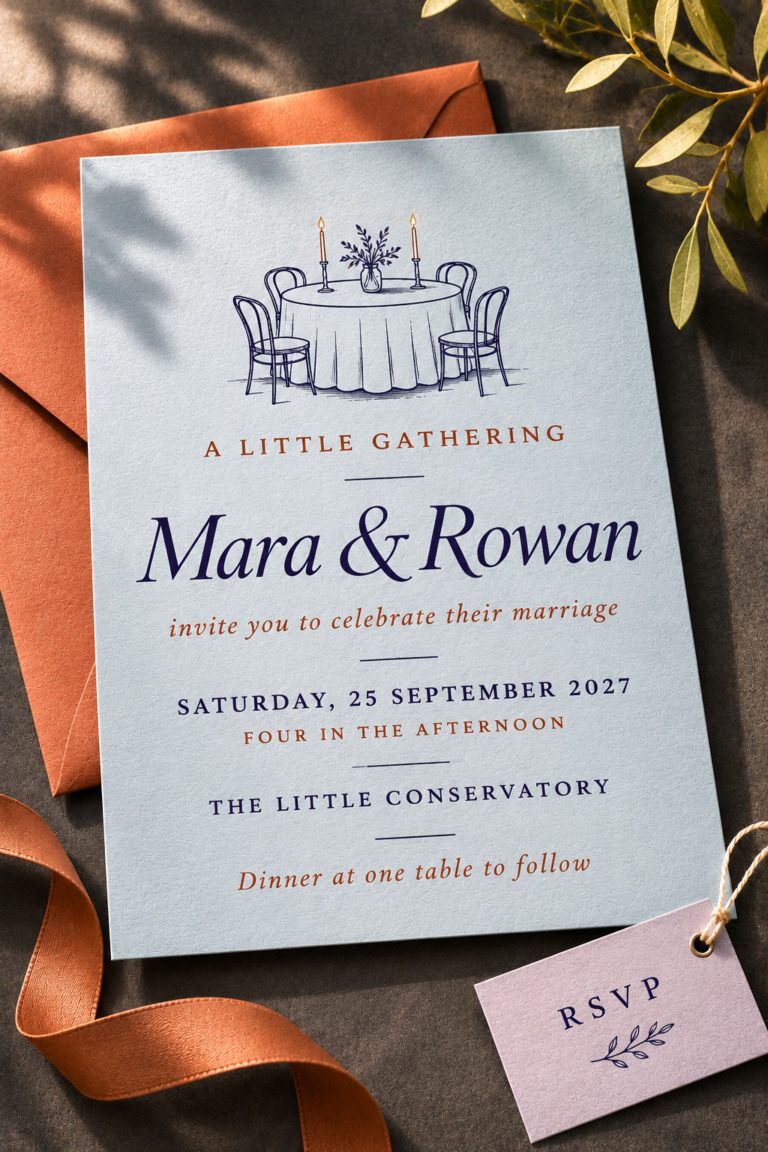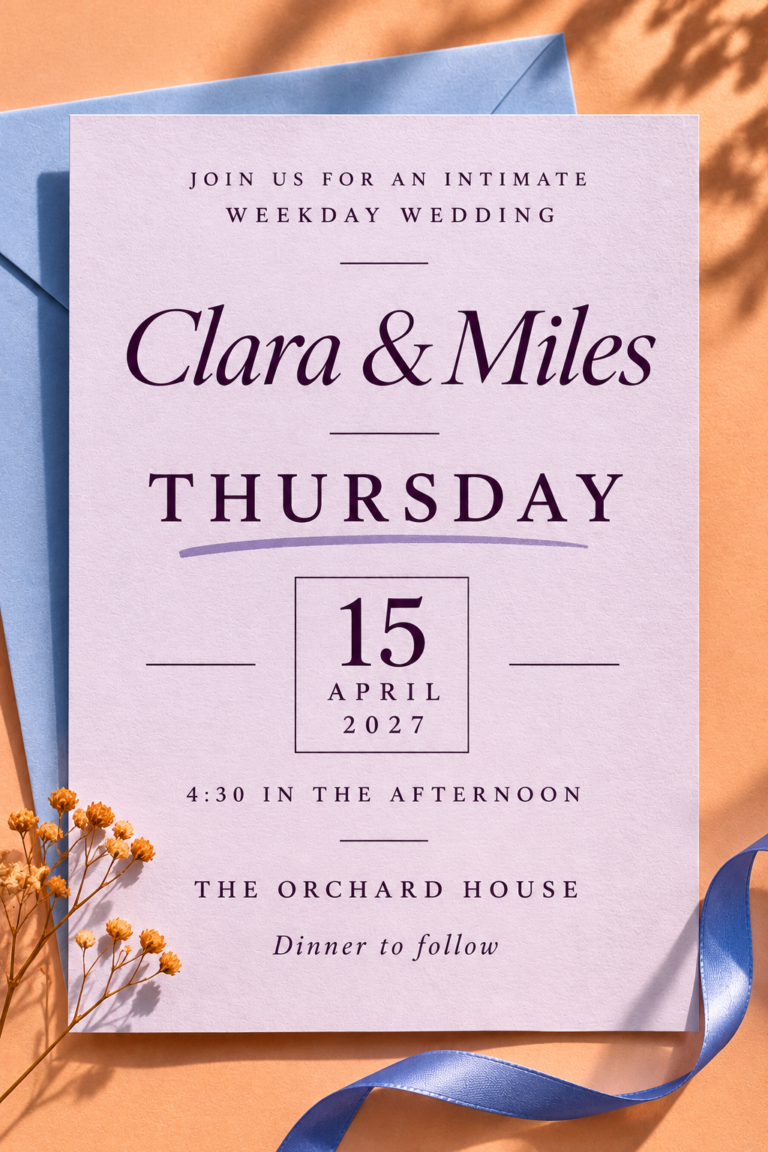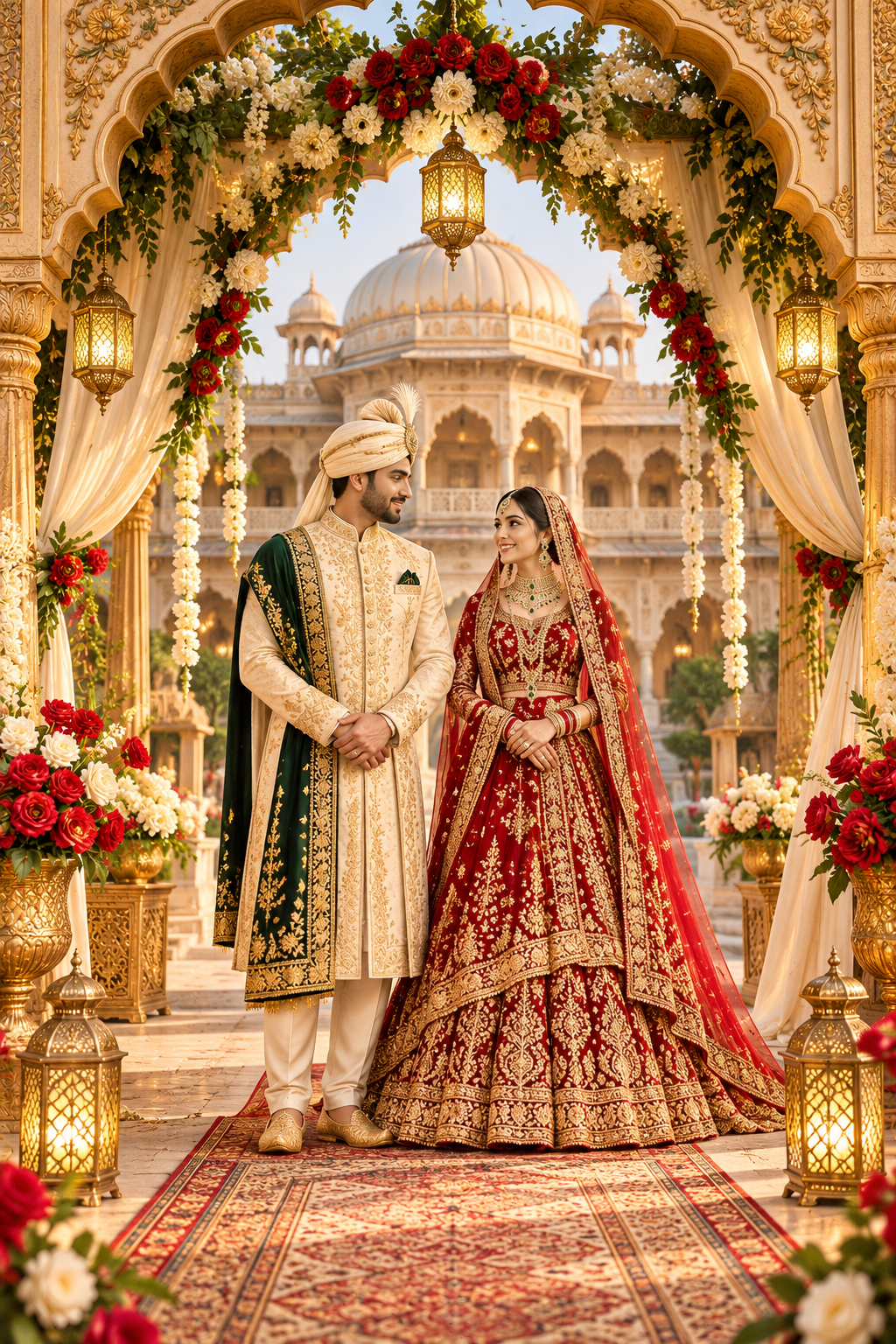
Imagine a wedding invitation that reveals an entire celebration before guests arrive: magnificent architectural arches, glowing lanterns, beautifully dressed families and a couple framed by cascading flowers. Rather than simply announcing a wedding, the artwork introduces guests to its atmosphere.
Exploring traditional grand wedding ceremony illustration ideas allows couples to transform their cultural heritage, wedding venue and personal story into meaningful stationery.
From royal palace settings to elegant church interiors and intimate Nikah celebrations, illustrated wedding invitations offer countless opportunities for artistic expression. The key is to create a scene that reflects the actual celebration rather than relying on decorative grandeur alone.
1. Royal Palace Wedding Ceremony Illustration
A palace-inspired illustration brings architectural elegance to traditional wedding stationery. Ornamental archways, carved pillars, symmetrical windows and magnificent courtyards provide a dramatic setting for the couple.
Position the bride and groom beneath a central arch, allowing the architecture to frame the ceremony naturally.
Emerald green, antique gold and ruby red can create a regal atmosphere, while warm ivory provides contrast for important invitation wording.
For additional personalisation, incorporate architectural details from the actual venue. Even a recognisable doorway or balcony can make an otherwise imaginary palace scene feel connected to the celebration.
2. Traditional Hindu Wedding Mandap Artwork
A beautifully illustrated mandap can become the centrepiece of a traditional Hindu wedding invitation.
Decorate the structure with floral garlands, fabric draping and ornamental pillars. Depending on the ceremony being represented, the artwork may also include the sacred fire and other meaningful elements.
Rather than crowding every ritual into one composition, focus on a particular ceremonial moment.
Hindu wedding traditions vary considerably between regions and families, so confirm the appropriate clothing, symbols and ceremonial details before finalising the artwork.
Explore our Hindu wedding card designs for complementary stationery inspiration.
3. Elegant Nikah Ceremony Illustration
A Nikah-inspired wedding illustration can express celebration through refined architectural patterns, floral arrangements and graceful traditional clothing.
Consider a scene featuring an elegant indoor setting with decorative arches, soft lighting and a colour palette of ivory, forest green and champagne gold.
Couples who prefer invitations without human figures can illustrate the ceremony venue, floral arrangements or geometric patterns instead.
Avoid adding religious text purely as decoration, particularly if the invitation’s eventual handling or disposal could cause concern.
Our collection of Muslim wedding cards offers further design inspiration.
4. Grand Cathedral or Chapel Wedding Illustration
For couples celebrating in a historic church or chapel, architectural artwork can capture the setting’s distinctive character.
Include tall windows, floral arrangements beside the aisle and soft light entering through the building.
A perspective drawing from the entrance creates a natural visual journey towards the ceremony area. Alternatively, an exterior watercolour can highlight the venue without revealing the couple’s appearance.
Muted blue, silver, cream and soft lavender suit this artistic direction. Refer to the actual venue when illustrating its architecture rather than inventing important identifying features.
5. Traditional Wedding Procession Illustration
A procession-inspired wedding invitation captures the excitement surrounding the arrival of the wedding party.
Depending on the family’s traditions, the artwork could feature musicians, decorated entrances, colourful clothing and relatives welcoming the couple.
An elongated illustration can convey movement across a landscape-format invitation. Keep smaller figures in the background and reserve the strongest colours for the central subjects.
A procession scene works particularly well as an envelope liner or the opening panel of a gatefold wedding invitation.
6. Heritage Courtyard Wedding Artwork
A decorated courtyard offers a more intimate interpretation of grand traditional wedding illustrations.
Use stone archways, hanging lanterns, patterned flooring and flowering plants to create depth. Show the ceremony space surrounded by warm architectural details rather than filling every corner with ornamentation.
Terracotta, muted turquoise and ochre create a welcoming colour palette.
This approach is especially attractive for heritage properties, destination weddings and outdoor celebrations inspired by traditional architecture.
7. Vintage Royal Bride and Groom Portrait
Instead of illustrating the entire wedding venue, place the couple at the centre of a portrait inspired by traditional painting styles.
Detailed clothing, embroidered fabrics and carefully selected accessories can tell a visual story about the celebration.
Frame the portrait with a restrained architectural motif or decorative arch. Leave sufficient space for wedding wording beneath the artwork.
A personalised portrait can also be adapted for thank-you cards, welcome signs and anniversary keepsakes.
8. Grand Evening Wedding with Illuminated Architecture
An evening ceremony presents opportunities to explore atmospheric lighting.
Imagine a deep indigo sky above a magnificent courtyard, with warm lanterns illuminating the entrance and floral arrangements surrounding the couple.
Use highlights selectively to guide attention towards the central ceremony. The contrast between warm golden light and cooler surroundings creates visual depth without requiring excessive decorative elements.
This style is particularly suitable for formal receptions and outdoor evening celebrations.
Choosing the Right Wedding Illustration Style
Different artistic approaches communicate different moods.
| Illustration style | Visual character | Recommended application |
|---|---|---|
| Watercolour | Soft and romantic | Venue illustrations |
| Digital painting | Rich and detailed | Royal ceremony scenes |
| Vector artwork | Clean and adaptable | Editable invitation graphics |
| Vintage miniature-inspired art | Decorative and historical | Heritage wedding stationery |
| Fine-line architectural sketch | Refined and understated | Traditional luxury invitations |
Select the style according to the intended application. A detailed painting may suit a large invitation, while simpler artwork can remain clearer on a small RSVP card.
Build Your Illustration Using Three Layers
A useful way to organise a grand ceremony composition is to divide the artwork into three visual layers.
The foreground introduces details such as flowers, lanterns or decorative textiles. The middle ground contains the couple and important ceremonial elements. The background establishes the venue through architecture, gardens or surrounding scenery.
Give each layer a different level of detail. If every object receives equal emphasis, the scene can become difficult to interpret.
Leave a quiet section for invitation wording, or place the text on a separate card. This keeps essential information readable without sacrificing artistic detail.
Browse our wedding invitation templates for layout inspiration.
Prepare a Personalised Wedding Illustration Brief
Before commissioning or creating artwork, collect venue photographs, clothing references, preferred colours and details of the traditions you want represented.
Identify the main ceremonial moment and decide whether the illustration should show recognisable people or anonymous artistic figures.
Specify which cultural or religious elements should be included or avoided. Obtain permission before using personal photographs belonging to other people.
For weddings involving different cultural backgrounds, ask both families which details matter most. A thoughtfully chosen composition can acknowledge both traditions without combining unrelated ceremonial symbols.
Practical Tips for Printing and Digital Sharing
Keep the artwork separate from editable wedding information wherever possible. This allows names, dates and venue details to be updated without recreating the illustration.
Aim for 300 PPI at the intended print size when preparing raster artwork, and confirm bleed requirements with your printer.
For digital invitations, preview the design on a phone. Small decorative details should never obscure the ceremony information.
Use cropped portions of the artwork for menus and RSVP cards rather than shrinking the entire scene.
Frequently Asked Questions
What makes a traditional wedding illustration look luxurious?
Consistent colours, carefully arranged architecture, balanced visual detail and refined typography often create a more luxurious appearance than excessive decoration.
Can a grand wedding illustration work on a simple invitation?
Yes. Place the detailed illustration in one section and use a plain background for the wedding information.
Can AI-generated artwork represent a traditional wedding accurately?
It can provide creative concepts, but clothing, architecture, religious symbols and ceremonial details require manual review for cultural accuracy.
Turn Your Wedding Story Into Art
Traditional grand wedding illustrations are most meaningful when they reflect the couple’s identity, heritage and chosen celebration.
Whether inspired by a royal courtyard, religious ceremony or historic venue, choose details that genuinely belong to your wedding story. With thoughtful composition and accurate cultural references, your invitation can become both a practical announcement and a beautiful artistic keepsake.