
Your wedding invitation is often the first glimpse guests receive of your celebration. Before they see the venue, flowers, or decorations, they experience the mood of your wedding through the stationery you send.
A beautifully coordinated wedding invitation suite does more than announce the date. It organizes important details, reflects your personality, and prepares guests for the occasion.
Whether you prefer modern minimalism, romantic florals, traditional elegance, or a luxurious custom design, understanding how invitation suites work helps you create something both beautiful and practical.
This guide explores essential stationery pieces, creative design ideas, wording examples, and thoughtful ways to customize your wedding invitations.
What Are Wedding Invitation Suites?
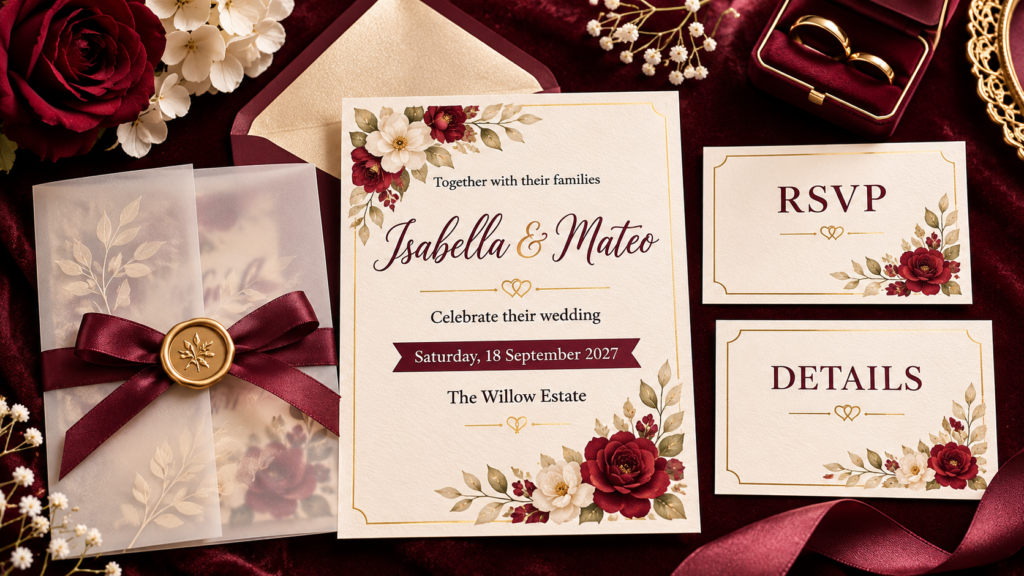
Wedding invitation suites are coordinated collections of wedding stationery designed to share important celebration details.
Instead of sending a single card containing everything, couples can use several matching pieces to organize information clearly.
A typical suite includes a main wedding invitation, RSVP card, details card, and mailing envelope. Additional elements may include reception cards, decorative wraps, envelope liners, or other inserts.
The cards usually share consistent colors, typography, illustrations, and design details.
This coordinated appearance makes the entire invitation feel like one thoughtfully designed collection.
Essential Components of a Wedding Invitation Suite
1. Main Wedding Invitation Card
The main invitation is the centerpiece of your stationery suite.
It introduces the couple, announces the marriage celebration, and communicates the primary event information.
A well-designed wedding invitation usually includes:
- Couple’s names
- Host or family names, when appropriate
- Wedding date
- Ceremony time
- Venue name and location
- Invitation wording
Important information should remain readable even when the card includes decorative illustrations or elaborate typography.
2. RSVP Response Card
An RSVP card gives guests a convenient way to confirm whether they will attend.
Traditional printed suites may include a separate return envelope, while modern invitation sets sometimes direct guests to an online response form.
You can include:
“Kindly reply by 15 August 2027.”
Then provide response options, guest names, and meal selections if needed.
Make the deadline realistic according to your venue and catering arrangements.
3. Wedding Details Card
A details card carries information that doesn’t belong on the main invitation.
This might include directions, dress codes, transportation options, accommodation recommendations, or a wedding website address.
For celebrations involving multiple locations, an additional details card can prevent guests from confusing the ceremony venue with the reception venue.
4. Matching Wedding Envelopes
Envelopes complete the invitation presentation and protect the stationery during delivery.
Consider matching envelope colors, printed return addresses, decorative liners, or personalized seals.
Choose decorative finishes carefully so the invitation remains practical to mail and easy for guests to open.
Popular Wedding Invitation Suite Designs
Different design styles can completely change the atmosphere of your invitation collection.
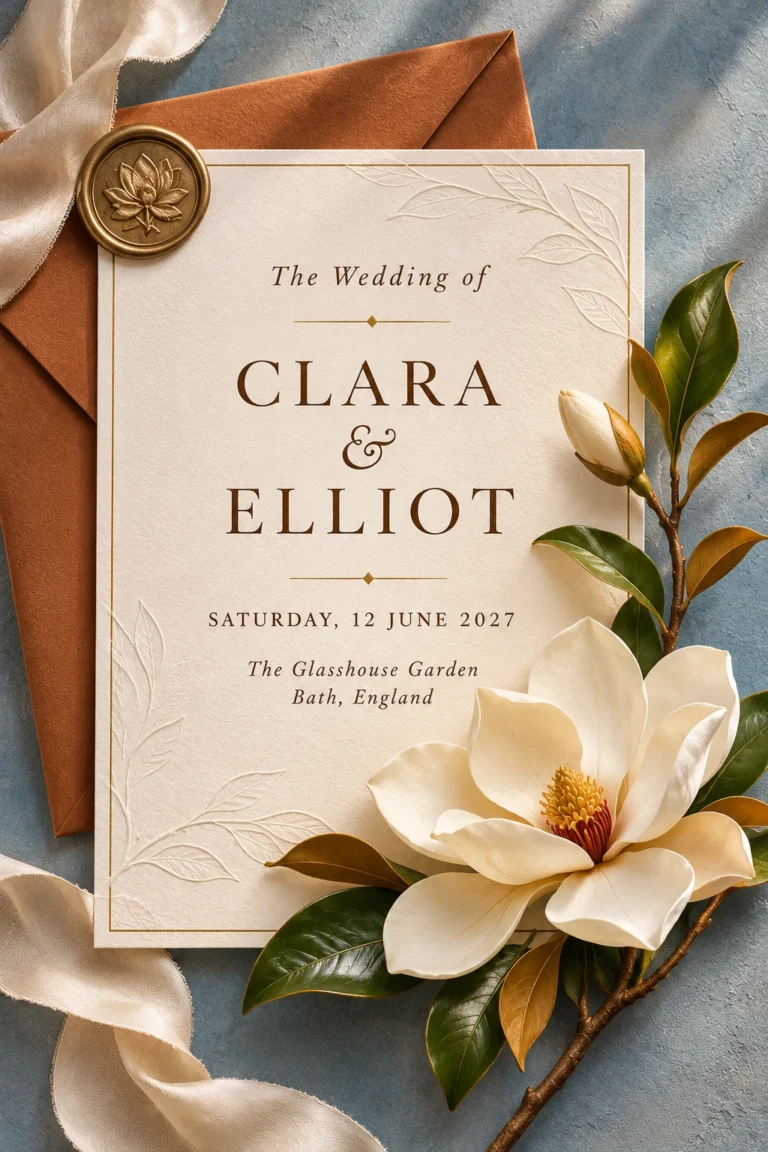
Luxury Wedding Invitation Suites
Luxury suites often feature textured cardstock, metallic details, sophisticated typography, or layered inserts.
Burgundy and champagne gold create a rich, formal appearance. Ivory and deep brown can produce a quieter, understated elegance.
A luxury design doesn’t require every premium finish. One distinctive feature, such as an illustrated border or elegant envelope, may be enough.
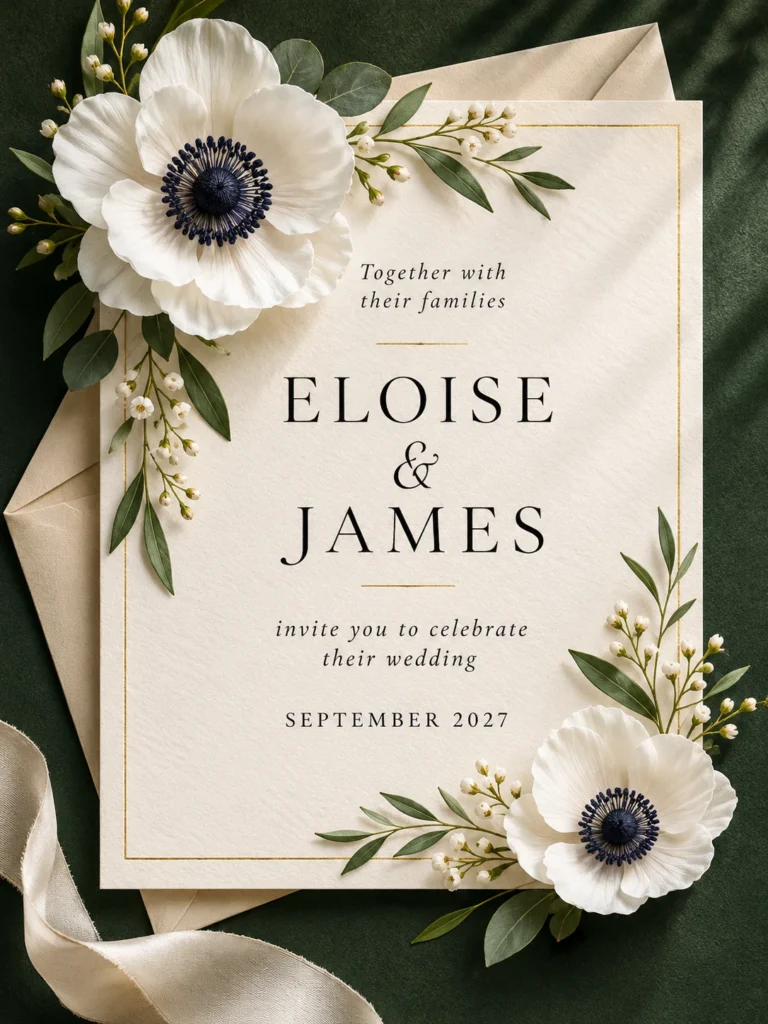
Modern Minimalist Wedding Suites
Minimalist wedding invitation sets emphasize spacious layouts, clean lines, and readable fonts.
Neutral palettes, black typography, and carefully positioned details create a sophisticated appearance without excessive decoration.
This style works especially well for couples who appreciate simple, contemporary designs.
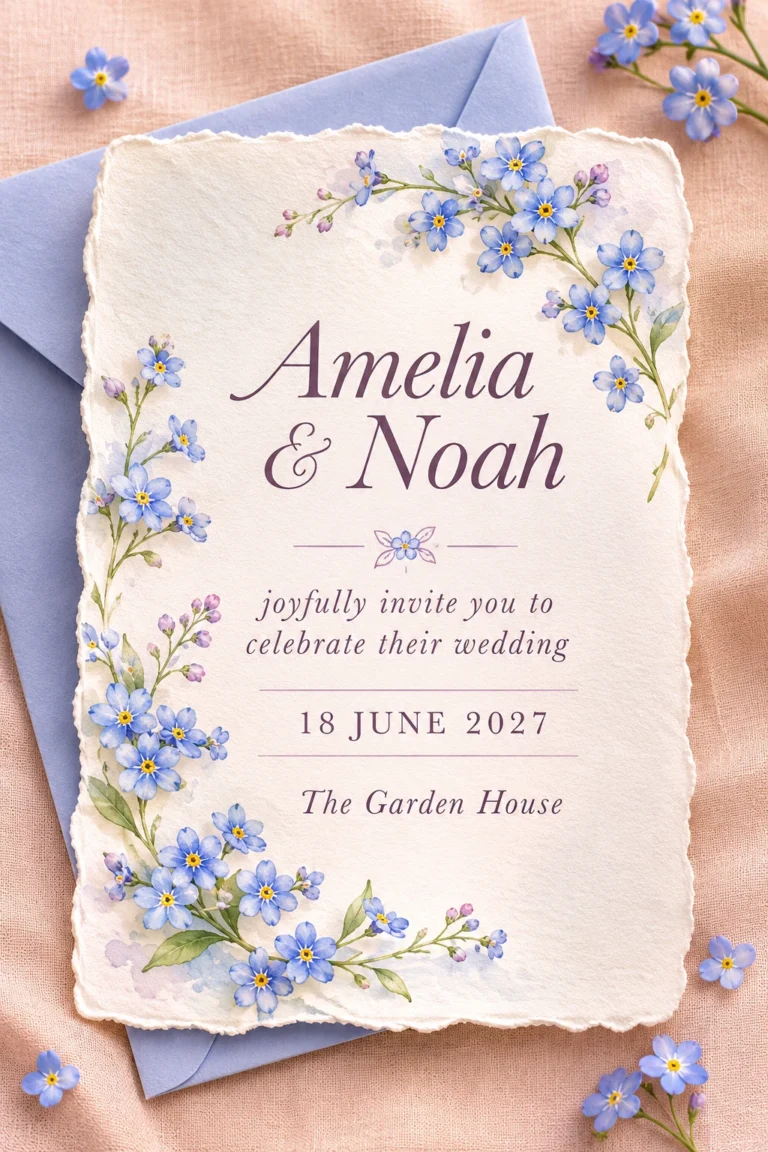
Floral Wedding Invitation Suites
Floral stationery remains a versatile choice for garden weddings, romantic celebrations, and outdoor ceremonies.
Choose illustrations that complement the wedding season or venue.
For example, soft wildflowers can suit a relaxed countryside celebration, while rich botanical artwork can create a more dramatic evening look.
Traditional and Cultural Wedding Suites
Cultural wedding stationery may incorporate meaningful colors, symbols, decorative patterns, and additional ceremony cards.
Some celebrations involve multiple events, such as a Mehndi, Sangeet, Nikah, or reception.
When appropriate, consider separate inserts for each event so guests clearly understand which ceremonies they are invited to attend.
Wedding Invitation Suite Wording Examples
Wording should reflect the tone of your celebration while making essential information easy to understand.
Formal Wedding Invitation
“Together with their families, Isabella and Mateo request the pleasure of your company as they celebrate their marriage.”
Modern Wedding Invitation
“We’re getting married! Join us for a beautiful day of love, laughter, and unforgettable memories.”
Reception Details Card
“Please join us for dinner and dancing following the ceremony. Reception begins at 6:30 PM.”
For additional examples, explore our guide to marriage invitation text, featuring wording ideas for traditional, modern, and cultural wedding celebrations.
Keep longer wording on the main invitation only when it doesn’t interfere with the event details.
How to Create Your Own Wedding Invitation Suite
Creating coordinated wedding stationery becomes easier when you organize the process into manageable decisions.
Step 1: Choose a Visual Theme
Start with two or three complementary colors. Select typography and decorative elements that suit the wedding atmosphere.
Step 2: Organize the Information
Separate essential ceremony information from optional guest instructions.
Avoid repeating the same address or paragraph across several inserts unless it helps guests.
Step 3: Select the Necessary Cards
A small local wedding may require only a main invitation and RSVP instructions.
A destination wedding could benefit from additional travel, accommodation, and itinerary information.
Step 4: Create a Matching Layout
Use consistent heading styles, spacing, decorative patterns, and colors throughout the suite.
Matching doesn’t mean every card must look identical. Each piece can have a slightly different arrangement while sharing the same visual identity.
Step 5: Review Before Printing
Confirm all names, dates, times, addresses, and response instructions.
Print a sample to evaluate text size, color accuracy, and paper quality.
A Guest-First Method for Planning Your Suite
A useful way to design an invitation suite is to consider the order in which guests need information.
First, they need to know who is getting married and when.
Second, they need clear directions for attending.
Third, they need a convenient way to respond.
This suggests a simple structure:
- Invitation card: The celebration
- Details card: The practical arrangements
- RSVP card: The guest’s response
This approach avoids cluttering one card with too much information.
Before finalizing your suite, show the complete collection to someone unfamiliar with the wedding plans. Ask whether they can identify the correct venue, arrival time, and RSVP deadline.
Their feedback may reveal details that are obvious to the organizers but confusing to guests.
Digital vs. Printed Wedding Invitation Suites
Printed invitation suites offer a traditional experience. Guests can hold the cards, appreciate the materials, and preserve them as keepsakes.
Digital suites can provide interactive links, convenient RSVP forms, and easy updates.
Both options can look professional when designed carefully.
For digital invitations, test every card on a mobile screen and ensure text remains readable.
For printed invitations, check paper sizes, envelope dimensions, and mailing requirements before placing a large order.
How to Keep Wedding Stationery Costs Manageable
A coordinated suite doesn’t need an unlimited budget.
Consider combining accommodation, directions, and dress-code information into one details card.
A wedding website can also replace several printed inserts.
You can save additional costs by using standard card sizes, limiting specialty printing, and choosing one premium decorative feature instead of several.
Most importantly, decide which pieces your guests actually need before spending money on optional extras.
Frequently Asked Questions
What is included in a wedding invitation suite?
A typical suite contains a main wedding invitation, RSVP card, details card, and mailing envelope. Optional items include reception cards, decorative wraps, and envelope liners.
Are wedding invitation suites expensive?
Prices vary according to design complexity, paper, printing methods, quantity, and decorative finishes. Simple coordinated sets can be more affordable than heavily customized luxury stationery.
Can I create wedding invitation suites online?
Yes. Digital design tools can help you create matching invitation cards, RSVP templates, and details cards. Always check print dimensions and image quality before exporting.
Do save-the-date cards belong in the invitation suite?
Save-the-date cards can share the same design theme, but they are generally sent earlier rather than enclosed with the formal wedding invitation.
How many cards should a wedding invitation suite have?
There is no fixed number. Include the main invitation and whichever additional cards are necessary to communicate essential information clearly.
Final Thoughts
The most memorable wedding invitation suites combine thoughtful design with practical communication.
Every card should have a clear purpose, whether announcing the ceremony, sharing travel information, or collecting guest responses.
Choose a style that reflects your celebration, keep the information accurate, and make the experience convenient for your guests.
A coordinated invitation suite creates a beautiful introduction to the wedding while helping everyone feel informed, welcomed, and excited to celebrate.