An engagement begins a new chapter, but sharing the news with loved ones makes the occasion even more meaningful. Whether you’re planning a traditional family gathering, an intimate dinner, or a grand celebration, a thoughtfully designed engagement card helps set the mood before the event begins.
The perfect card doesn’t have to be expensive or elaborate. Sometimes, a few carefully chosen words, a beautiful colour palette, and a personal detail are enough to create something guests will remember.
This guide explores engagement card designs, invitation wording, creative ideas, and practical tips for making a card that reflects your relationship.
What Is an Engagement Card?
An engagement card is a printed or digital greeting used to announce an engagement, invite guests to an engagement celebration, or congratulate a newly engaged couple.
These cards serve different purposes.
An engagement announcement shares the happy news, while an engagement invitation provides the details guests need to attend a celebration. A congratulations card, on the other hand, is usually sent by friends or relatives to express their good wishes.
Understanding the purpose of your card is the first step towards creating the right design.
6 Beautiful Engagement Card Design Ideas
1. Minimalist Engagement Card
A minimalist design uses clean typography, generous white space, and subtle decorative elements.
Imagine an ivory background with the couple’s names printed in charcoal lettering and a tiny golden heart underneath.
This style works particularly well for couples who appreciate modern, understated elegance.
Suggested colours: Ivory, beige, charcoal, and champagne.
2. Romantic Floral Engagement Card
Flowers can instantly make an invitation feel warm and celebratory.
Watercolour roses, delicate peonies, or botanical illustrations around the edges create a romantic appearance without overwhelming the message.
Choose flowers that have personal significance, perhaps the same blooms used during the proposal.
Suggested colours: Dusty pink, sage green, lavender, and cream.
3. Royal Engagement Card Design
For an elegant evening celebration, consider a rich background with metallic accents.
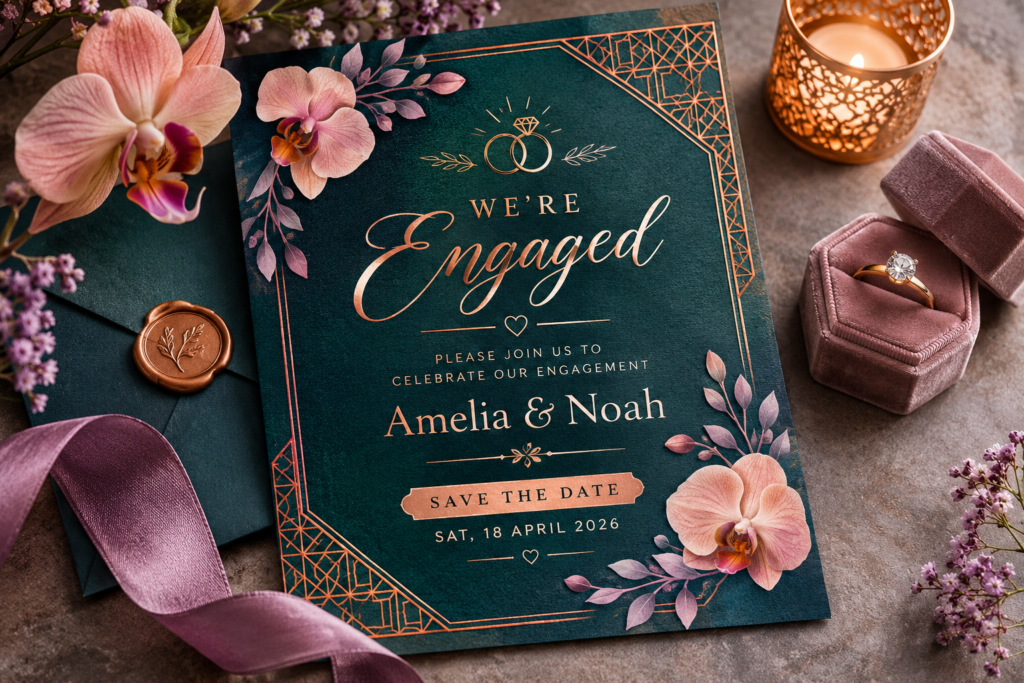
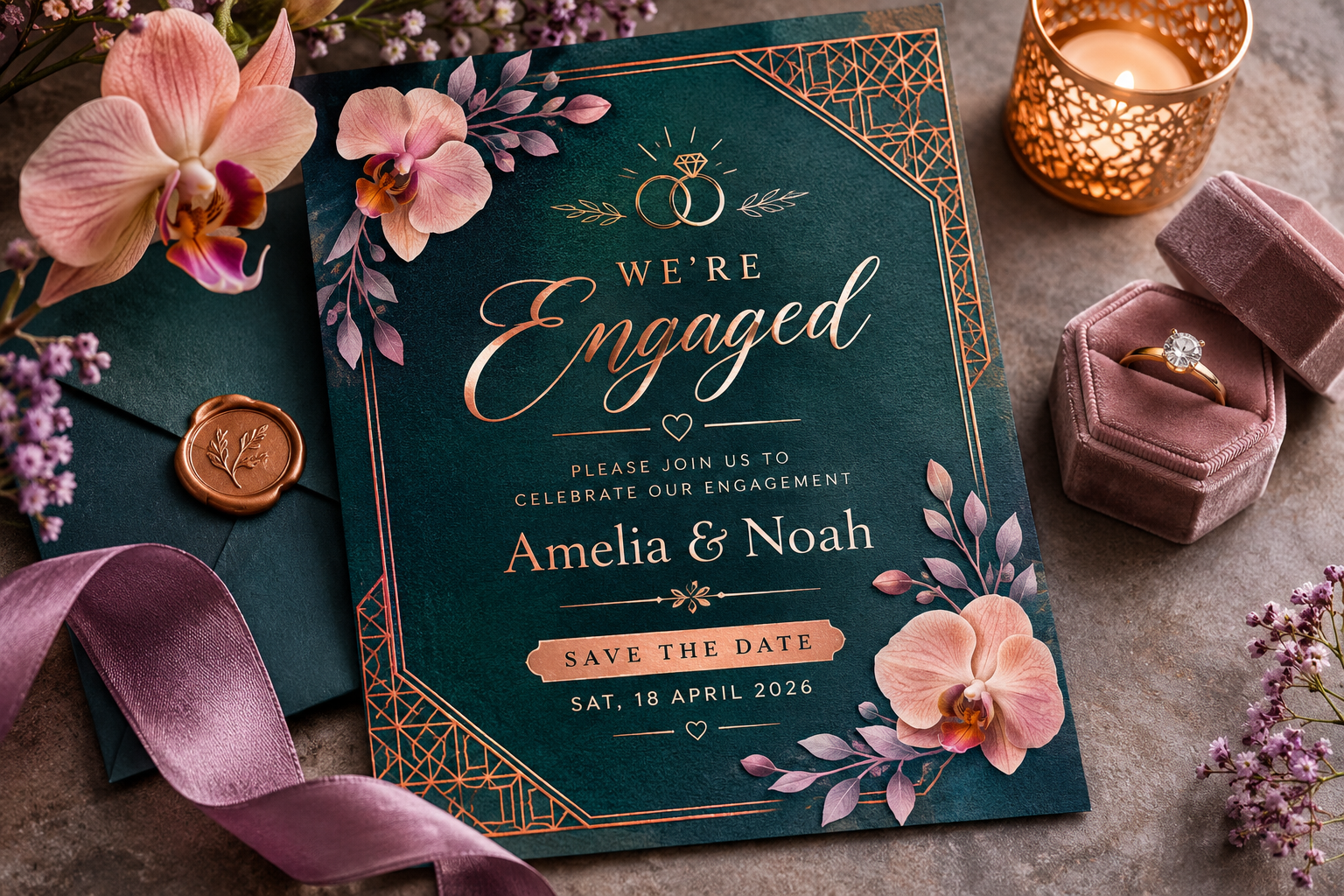
Midnight blue paired with gold lettering creates a refined look, while emerald green and copper offer a distinctive alternative.
Decorative borders, embossed patterns, and elegant calligraphy can add a luxurious finishing touch.
4. Photo Engagement Announcement Card
A favourite photograph can make an engagement announcement feel immediately personal.
Consider using a natural photograph from the proposal, a meaningful holiday, or a relaxed afternoon together.
Leave enough clear space for the wording so the image and text complement each other.
5. Traditional Engagement Ceremony Card
Families celebrating a formal engagement ceremony may prefer a design inspired by their cultural traditions.
Decorative patterns, meaningful symbols, and family-approved wording can make the invitation feel appropriate to the occasion.
For example, some South Asian families may prefer a floral design with the names of both families, while other couples may choose a simpler invitation focused entirely on the celebration.
6. Modern Digital Engagement Card
Digital engagement cards are convenient for couples inviting guests through WhatsApp, email, or social media.
A vertical design works well on mobile phones, while a landscape layout can be useful for email invitations.
Consider adding a simple illustrated timeline, a meaningful photograph, or a scannable RSVP link.
Engagement Card Wording: 5 Ready-to-Use Examples
A beautiful design catches attention, but the words communicate the heart of the celebration.
Here are five engagement invitation wording examples you can personalise.
Simple Engagement Invitation
Two hearts, one beautiful beginning!
With happiness in our hearts, we invite you to celebrate the engagement of
Emma & Daniel
Date: [Event Date]
Time: [Event Time]
Venue: [Location]
Your presence will make our celebration even more special.
Romantic Engagement Card Message
Some love stories begin quietly and become the most beautiful chapters of our lives.
We’re delighted to announce our engagement!
Join us as we celebrate love, laughter, and the journey ahead.
Sophia & Oliver
[Date, Time and Venue]
Formal Engagement Invitation
With great pleasure, our families request the honour of your presence at the engagement celebration of
Aisha & Ahmed
We would be delighted to share this memorable occasion with our cherished relatives and friends.
[Event Details]
Short Engagement Card Wording
We said yes to forever!
Lily & James are engaged!
Come celebrate our wonderful news.
[Date] | [Time] | [Venue]
Engagement Announcement Without a Party
Our favourite adventure is just beginning.
We’re happy to share that we’re engaged!
Thank you for being part of our lives and sharing in our happiness.
Mia & Ethan
Notice how each example creates a different feeling. Choose wording that sounds natural to you instead of selecting the most formal or elaborate option.
What Information Should an Engagement Card Include?
Before finalising the design, make sure your invitation answers the questions guests are most likely to ask.
An engagement party invitation generally needs:
- The couple’s names
- The occasion being celebrated
- The event date and starting time
- The venue name and address
- RSVP contact details and deadline, if applicable
- Dress code or special instructions, when needed
For an online celebration, include the relevant meeting information and joining instructions.
If you’re sharing an announcement rather than organising an event, the couple’s names and a short message may be enough.
A Fresh Design Approach: The Three-Glance Rule
One useful way to evaluate your engagement card is to imagine someone seeing it for just three brief moments.
First glance: Can they immediately recognise that the card is about an engagement?
Second glance: Can they identify the couple’s names?
Third glance: Can they find the event date and location without searching through decorative text?
If the answers are yes, your design is probably communicating its message clearly.
This approach helps prevent a common problem: creating an attractive invitation that is surprisingly difficult to read.
For digital invitations, test the design on an actual mobile screen before sending it.
How to Make an Engagement Card Step by Step
Creating a personalised engagement card can be straightforward with a little planning.
Choose Your Card Format
Decide whether you need a printed invitation, a digital image, or both.
For printed invitations, a 5 × 7-inch card is a practical starting size, although other dimensions are equally possible.
Select a Consistent Colour Palette
Choose two main colours and one accent colour.
A limited palette usually creates a more cohesive appearance than combining several unrelated shades.
Pick Readable Fonts
Use a decorative font for the couple’s names and a simpler font for the event information.
Avoid using multiple elaborate scripts, particularly for small text.
Add Your Personal Touch
Consider including a short quotation, an illustration of the proposal location, or a small symbol meaningful to your relationship.
The most memorable detail is often something guests recognise as genuinely yours.
Review Before Sharing
Check names, spelling, dates, times, venue details, and RSVP information carefully.
Send a preview to someone who has not helped create the card. Their fresh perspective may reveal missing information.
Digital vs Printed Engagement Cards
Both formats can work beautifully, but they offer different experiences.
Digital engagement cards are easy to distribute, can be updated before sending, and are especially useful for international guest lists.
Printed engagement cards provide a physical keepsake and may suit formal celebrations or family traditions.
Some couples use both: printed invitations for close relatives and digital versions for guests living abroad.
There is no universal right choice. Consider your guests, budget, event style, and personal preferences.
From Marriage Introductions to Engagement Celebrations
For some couples, particularly where families are involved in the matchmaking process, the journey begins with an introduction long before an engagement is announced.
At that earlier stage, a respectful personal profile may help families understand someone’s education, interests, and background.
Our guide to the bio data format for marriage offers examples and practical suggestions for preparing that kind of introduction.
Once a couple decides to celebrate their engagement, the focus changes from introductions to sharing the happy news through a meaningful engagement card.
Common Engagement Card Mistakes to Avoid
Even an attractive design can become confusing if important details are overlooked.
Avoid overcrowding the card with decorative elements or lengthy paragraphs. Make sure the text contrasts clearly with the background.
Don’t use tiny lettering simply to fit more information onto the page.
Check that the venue address is complete and the event time is understandable to guests.
Most importantly, don’t feel pressured to imitate an expensive invitation. A simple, personal design can be just as meaningful.
Frequently Asked Questions
Can I create an engagement card online?
Yes. You can create an engagement card using an online design editor, personalise the wording, add photographs, and save the completed design as an image or PDF.
What should I write on an engagement card?
Include the couple’s names, a warm invitation or announcement, and any relevant event details. Keep the tone consistent with the celebration.
Is an engagement card different from a wedding invitation?
Yes. An engagement card announces or celebrates a couple’s engagement, while a wedding invitation asks guests to attend the wedding ceremony or related celebrations.
When should engagement invitations be sent?
For a local celebration, sending invitations roughly three to six weeks beforehand can be a useful planning guideline. Allow more time when guests need to arrange travel or accommodation.
Which colour is best for an engagement invitation?
There is no single best colour. Soft pastels create a romantic atmosphere, while jewel tones offer a more dramatic appearance. Choose colours that suit your celebration and ensure the wording remains readable.
Final Thoughts
An engagement card is more than a decorative piece of stationery. It is one of the first ways you share an important milestone with the people who matter to you.
Whether you prefer a floral invitation, a formal printed card, or a modern digital announcement, focus on clear information, thoughtful wording, and meaningful personal details.
The most beautiful engagement card is one that feels like it belongs to your story.